Advocacy
Potentially Non-Compliant HVAC Equipment Entering the Market
October 8, 2026 | 5 minute read
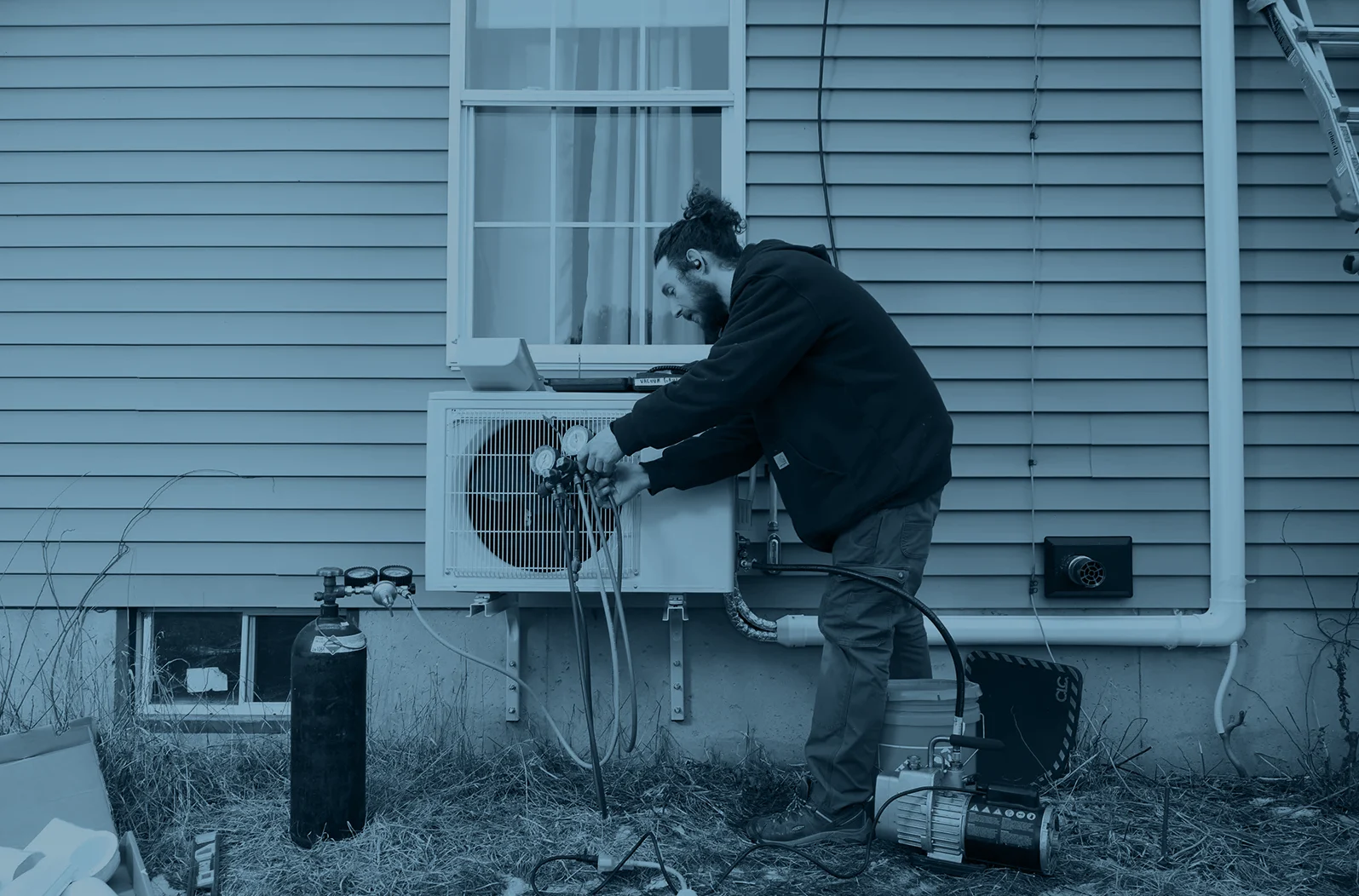
HARDI has received reports that unfamiliar manufacturers, importers, and brands are approaching members with HVAC equipment for sale, including R-410A outdoor units, which can still be manufactured and imported for servicing existing systems but cannot be used to install a new R-410A system. While EPA rules allow R-410A units, the Department of Energy's (DOE) energy-efficiency rules must also be met and compliance certificates filed with DOE.
For most distributors, checking federal equipment certifications has never been part of the normal purchasing process. When buying from established manufacturers, the manufacturer typically handles the testing, certification, and regulatory requirements long before the equipment reaches a distributor.
Distributors should do a few basic checks before any equipment enters a wholesaler's warehouse because DOE interprets “distribution in commerce” to include equipment held in inventory and available for sale. This means a distributor holding noncompliant equipment could face dead inventory.
If you see equipment that appears noncompliant, submit it to HARDI for further investigation and potential submission to federal investigators.
The best information to have is:
Brand or manufacturer name
Exact model number
Photo of the equipment nameplate (optional, but helpful to determine date of manufacture)
Product literature or specification sheet (optional, but helpful to determine if a product is "distributed in commerce")
1. Check the AHRI Directory
The AHRI Directory is a useful resource for checking HVAC equipment ratings and certified system combinations. AHRI-certified products have independently verified performance ratings, and air conditioners and heat pumps contained in the directory are automatically submitted to DOE.
Search the AHRI Directory of Certified Product Performance
For an R-410A outdoor unit being sold specifically as a replacement for an existing system, use the directory's “for servicing only” option. Currently, no systems are in the AHRI directory as "for servicing only."
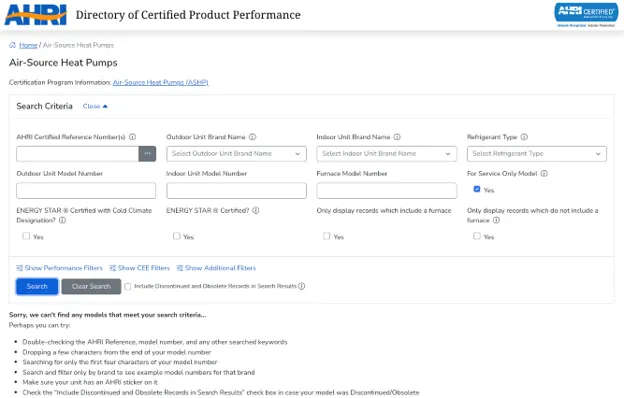
A special warning on R-410A service units
EPA allows R-410A condensing units and other specified components manufactured or imported after January 1, 2025, to be sold for servicing existing R-410A equipment. Those components must be labeled “for servicing existing equipment only.” A photograph of the equipment nameplate helps ensure it is properly labeled and compliant with EPA regulations.
Important note: Even after the EPA rule change, these units cannot be used to install a new R-410A system.
If someone is marketing a newly manufactured R-410A outdoor unit, do not assume that “service unit” means it is exempt from other requirements. The equipment still needs to meet applicable DOE requirements, and how it is marketed and used matters.
2. Check DOE
If the unit does not appear in the AHRI Directory, the manufacturer can also submit the required certificate directly to the DOE. DOE maintains a database of all compliance certificates manufacturers submit for every brand they sell by model number.
Search the DOE Compliance Certification Database
You can search for R-410A service units by filtering the Product Group Code Description to “Outdoor air conditioners units with no match."
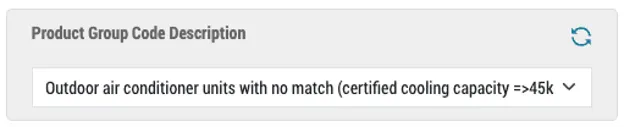
Search separately for both the brand name and model number. DOE's database includes certification records manufacturers and importers submit for covered equipment. DOE, however, does not certify that the submitted compliance certificates have been tested for accuracy. DOE can remove equipment from its database if it later finds it noncompliant.
If a brand and model do not appear in the DOE database, it cannot be distributed in commerce.
3. Check the safety certification
In addition to energy efficiency regulations, the EPA also requires some equipment to meet the correct safety standard. Independent labs such as UL or ETL must test the equipment.
An obvious sign equipment does not meet the correct safety standard is listing multiple refrigerant safety classifications such as A1 and A2L. If a condensing unit says it can be used with R-410A, R-32, and R-454B, it violates the safety standard.
If equipment carries an ETL, UL, or other safety certification mark, verify it with the organization whose mark appears on the equipment. Many industries are affected by fake certification marks; for this reason, each nationally recognized testing laboratory provides a lookup tool to determine whether the product is certified.
Search UL Product iQ (easiest to search for file number listed below the mark)
A logo in a brochure or on a website is not enough. The manufacturer and model being offered should match the certification record.
What should raise a red flag?
Look for basic inconsistencies:
You cannot find the manufacturer or model in DOE's database.
The supplier cannot provide certification information.
The model number on the equipment does not match the certification record.
You cannot verify an advertised AHRI, ETL, or UL certification.
A newly manufactured R-410A unit is being marketed for installation as part of a new system or lacks the “for servicing only” label.
The seller's claims about the refrigerant, efficiency rating, or certification do not match the records you find.
Any one of these may have an explanation. The right response is to stop and ask questions before putting the equipment into inventory.
See something that doesn't look right? Send it to HARDI.
HARDI wants to ensure non-compliant equipment does not negatively affect the HVACR distribution channel. If you receive an unusual product offer or find equipment that does not appear to match DOE, AHRI, or safety-certification records, send it to HARDI by completing our form:
You do not need to determine whether the equipment violates federal law. Send us what you have, including the manufacturer, model number, photos, product literature, website listing, or other information from the seller.
HARDI will do additional due diligence before submitting likely non-compliant equipment to DOE or EPA for federal investigation.

Alex Ayers
Vice President of Government Affairs
Alex is HARDI’s lead lobbyist and regulatory expert, with over a decade of experience in Washington, DC. A former Iowa caucus delegate, he built early roots in grassroots politics. He has lobbied, published, and testified on taxes, energy, environment, agriculture, and economics. His work has been cited by the Wall Street Journal, Forbes, and the Tax Foundation.