Market Intelligence
Understanding the Numbers: AHRI Shipment Report Breakdown for July 2024
October 10, 2024 | 4 minute read

The July 2024 AHRI Shipment Report reveals notable trends within the HVAC industry, with air conditioners experiencing modest growth, heat pumps showing signs of recovery, and furnaces witnessing short-term improvement despite a long-term downward trajectory. As the industry moves through this transitional phase, insights into shipment performance offer a critical view of future opportunities and challenges.
Air-Conditioner Shipments Show Modest Growth
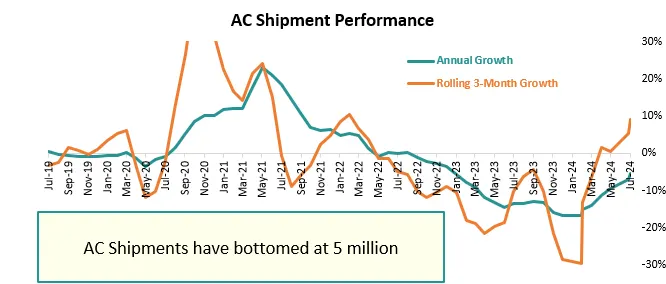
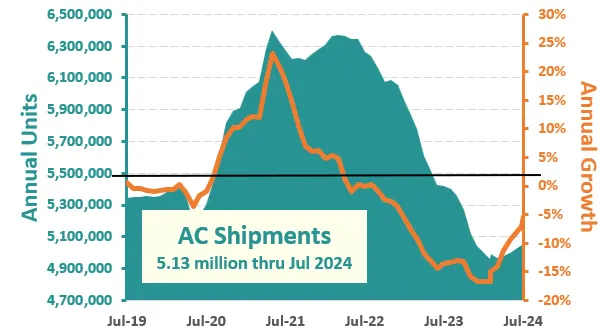
There were 613.2K air conditioners shipped during July 2024, an increase of 15.8% from July the previous year. The rolling 3-month growth (the orange line in the top chart) is currently at 9%, indicating a continuing moderate upward trend. The total number of AC shipments over the past 12 months amounts to 5.13 million, which is down 5.3% from one year ago. Year-to-date AC shipments are up 2.8%. April through July typically represents 47.5% of annualized shipments, which currently implies a shipment total of 4.72 million for 2024, or a decrease of 8% from 2023 totals.
Heat Pump Shipments Continue to Show Signs of Recovery
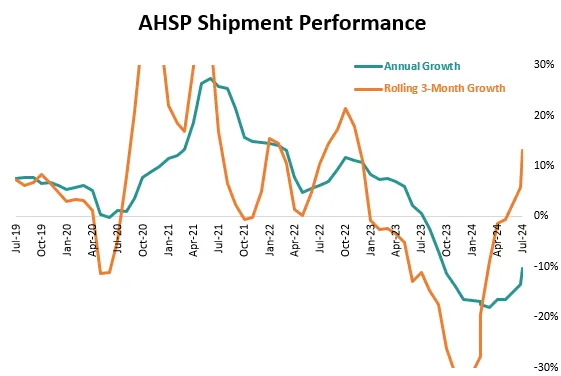
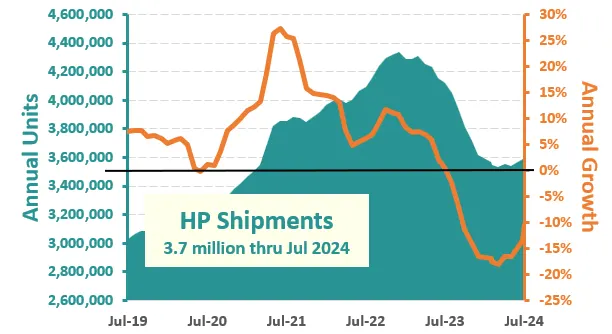
There were 430.2K Heat Pumps shipped during July 2024, an increase of 31.7% from July 2023. The rolling 3-month growth jumped to 13%, indicating an increase in shipments over the last three months. After reaching a low point in January 2023 with a negative growth rate, the rolling 3-month growth has rebounded, showing a strong upward trajectory 2024. This suggests a substantial short-term improvement in shipment performance, contrasting with the more gradual trend observed in the annual growth line. The total number of heat pump shipments over the past 12 months amounts to 3.69 million, which is down 10.3% from the 12 months through July 2023. Year-to-date heat pump shipments show an increase of 3.3% from one year ago. April through July typically represents 42.1% of annualized shipments, which currently implies a shipment total of 3.67 million for 2024 and a 0.6% decline.
Furnace Shipments Continue to Climb
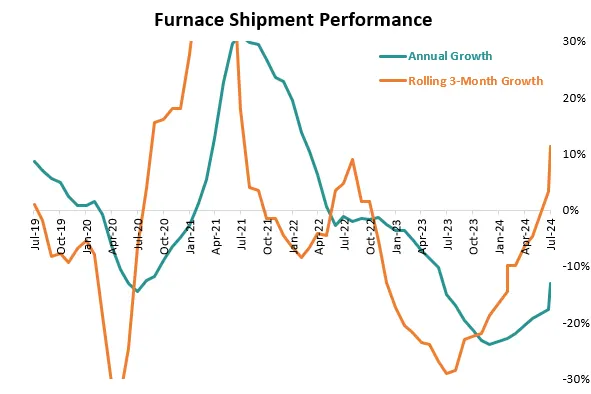
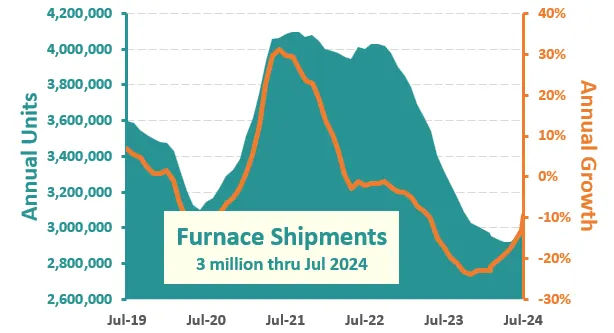
During July 2024, there were 257K furnace shipments (a combination of natural gas and oil), an increase of 20.3% from July the previous year. The recent 11.4%, 3-month growth rate is a recovery from a deep decline observed around July 2023, where the growth rate fell to -29%. This recent positive trend contrasts sharply with the more subdued movements in the annual growth line, highlighting the impact of short-term factors or changes in market conditions that may not yet be fully reflected in annual figures. Over the last year, furnace shipments totaled 3.01 million, down by 9.5% from July 2023. Year-to-date furnace shipments have declined by 0.4% through July 2024. April through July typically represents 30.5% of annualized shipments, which currently implies a CY 2024 shipment total of 3.4 million or an increase of 13.3% from 2023 totals.
Following the supply chain disruptions, distributors had to double their inventory levels to accommodate lead times that also doubled. As supply chain conditions begin to stabilize, shipments have dropped as distributors shift their focus to shedding excess stock. This inventory destocking trend has been a central theme in earnings conference calls over the past six to nine months, with recent updates indicating this phase is nearing its conclusion.
Over the past four years, HARDI distributors have seen a rollercoaster of sales growth. When COVID-19 first hit, annual sales growth was just under 4%. Two years later, it surged to 25%, only to taper off again, with growth now nearly flat. This return to more typical demand levels mirrors the patterns reflected in AHRI’s manufacturer shipment data. Historically, annual sales growth has averaged around 6%, with price increases accounting for about 2.5%. Looking forward, HARDI expects distributor sales growth to recover throughout the rest of 2024 and return to more normalized levels by 2025.
Learn More About Unitary Product Movement
While sales performance figures from our monthly Trends Report and AHRI shipment data offer a window into unitary market performance for distributors, they cannot compete with the real thing. HARDI’s new and improved Unitary Market Report offers essential insights to help you understand your market position and identify areas of growth or loss. Contact Tim Fisher or Grace Helser to learn how to get involved.

Grace Helser
Senior Research Analyst
As a Senior Research Analyst on HARDI's Market Intelligence team, Grace leverages her education in business and economics from the Ohio State University to provide industry insights and benchmarking programs for HARDI membership. She has a strong foundation in analysis and statistical methods, which she utilizes through in-depth survey work to develop comprehensive membership insights.