Market Intelligence
Metals Markets May Matter More for HVACR in 2026
January 27, 2026 | 3 minute read

After a relatively calm period in 2024 and early 2025, metals markets are flashing warning signals. Industrial metals such as copper, aluminum, and steel—all core inputs for HVACR equipment, components, and fabricated materials—have moved decisively higher over the past year. While distributors and contractors do not purchase commodities directly, sustained movements in metals markets almost always filter downstream into manufacturer pricing, product availability, and margin dynamics across the HVACR supply chain.
One useful indicator of this upstream pressure is the S&P GSCI Industrial Metals Index, which provides a broad, directional read on material cost trends across some key metals used throughout HVAC and plumbing systems. Although contractors and distributors do not transact in commodities, shifts in this index tend to appear—often with a lag—in the pricing of equipment, components, and fabricated materials installed in the field. As a result, the index offers an early signal for potential changes in replacement pricing, long-term bid risk, and future margin conditions.
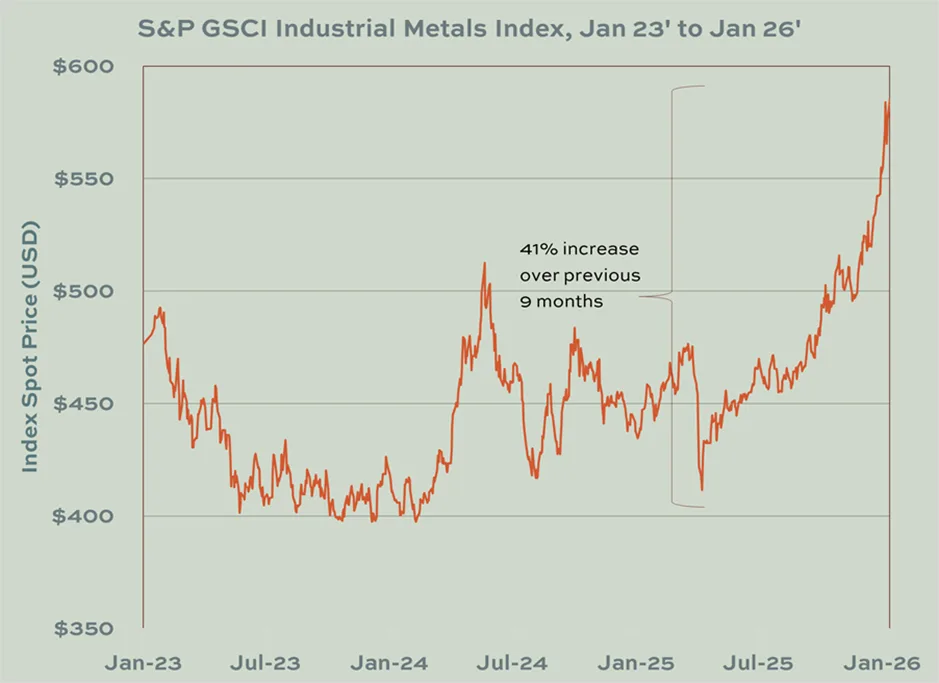
As illustrated in the figure above, the index has been highly volatile over the last 36 months but is now trending materially higher. It rose from roughly $415 in April 2025 to about $587 by January 2026, an increase of approximately 41 percent.
For HVACR businesses, this upward trend suggests that embedded input costs within equipment and system components may face renewed upward pressure in the months ahead. While these effects are rarely immediate, sustained metals inflation tends to narrow pricing flexibility and heighten sensitivity to cost assumptions on equipment-intensive or longer-duration projects. For distributors, this means more frequent price updates, shorter quote validity periods, and greater complexity in managing product margin exposure.
What is causing metals to surge?
Several structural forces continue to support higher metals demand and prices:
Electrification and grid expansion are driving long-term growth in copper and aluminum sales.
Data center construction remains a major consumer of metals-intensive mechanical systems.
Geopolitical supply risks and trade policy uncertainty have introduced greater volatility into global metals flows.
Mining investment constraints limit how quickly new supply can respond.
Together, these and other forces point to metals markets that are structurally prone to both higher prices and greater volatility.
What can the distribution channel do?
Metals volatility may encourage HVACR distributors to become more deliberate in how they manage margins, inventory, and pricing. When prices move unevenly, distributors can no longer rely on predictable, periodic price resets or broad category assumptions. Instead, tighter purchase timing, faster inventory turns, and more disciplined pricing reviews become critical tools for protecting margin.
Inventory strategy sits at the center of this challenge for HVACR distributors. Carrying additional inventory can help protect margins in a rising-price environment, while leaner positions limit balance-sheet exposure. The best distributors balance these trade-offs by sharpening demand forecasts, working more closely with manufacturers, and managing inventory at the category level rather than with a one-size-fits-all approach.
When Metals Move, HVACR Distributors Need Strategy in Motion
In 2026, metals pricing is likely to become a more visible consideration in distributor pricing, inventory, and customer strategy. As we progress into mid-Q1, clear communication around cost trends will help sales teams price with confidence and set realistic customer expectations. Proactive, transparent conversations with contractors about market conditions can also strengthen trust and reduce last-minute pricing friction.
Turn Market Volatility into Strategic Advantage
Metals may be unpredictable, but your strategy doesn’t have to be. Revisit pricing discipline, inventory positioning, and quote-validity practices, and put our Unitary Market Intelligence Program and Monthly Trends Report to work to stay ahead of cost volatility in 2026.
Tags:

Joey James
Senior Research Analyst
Joey James is a Senior Research Analyst on HARDI’s Market Intelligence team. He has over a decade of experience delivering data-driven insights across the public, private, and nonprofit sectors. He has worked in markets around the world, helping organizations make better decisions through market analysis, impact assessments, and forecasting. He is passionate about turning data into insights that drive growth and improve outcomes.