Market Intelligence
Early Winter 2024-25 Weather Outlook for Distributors
October 3, 2024 | 3 minute read
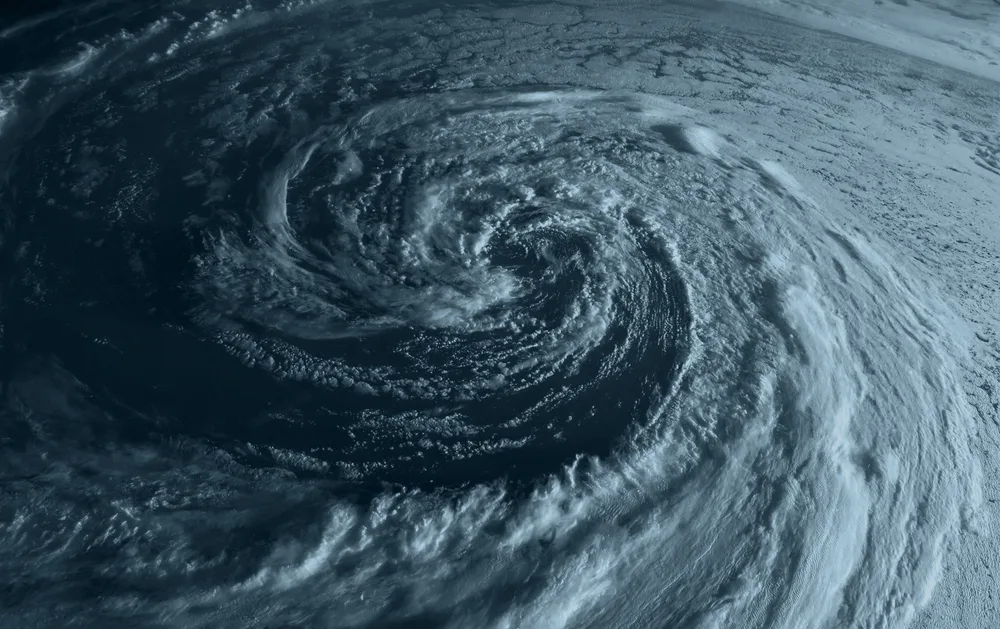
The United States National Oceanic and Atmospheric Administration (NOAA) is a well-respected agency tasked with monitoring atmospheric and oceanic data in order to forecast near and long-term weather trends. NOAA makes these predictions based on a history of patterns and data originating from the Pacific Ocean via the El Niño /Southern Oscillation (ENSO) general climate patterns. These patterns measure temperature developments, and these cycles typically result in separate weather patterns El Niño and La Niña.
What is El Niño and La Niña?
El Niño and La Niña are opposite ends of the ENSO cycle and are characterized by different short-to-long term climate patterns.
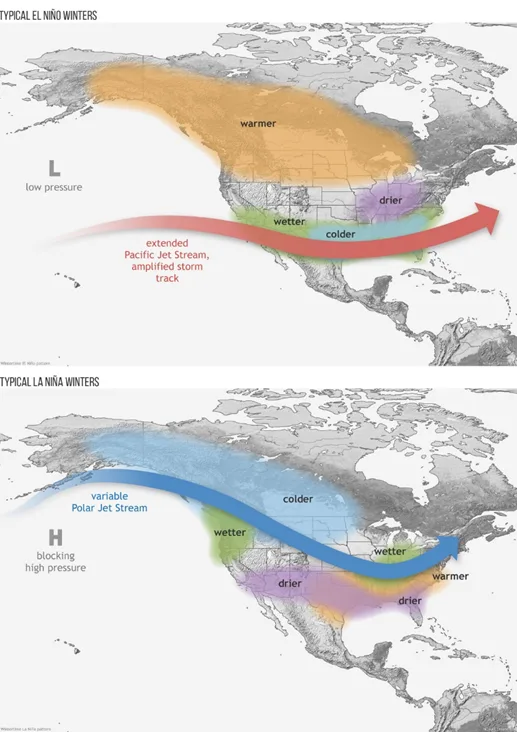
El Niño
Warmer than normal temperatures.
Occur more frequently.
Last 9-12 months.
La Niña
Cooler than normal temperatures.
Typically, last 1-3 years, however durations of either can vary wildly.
Early Outlook Favors another La Niña Year
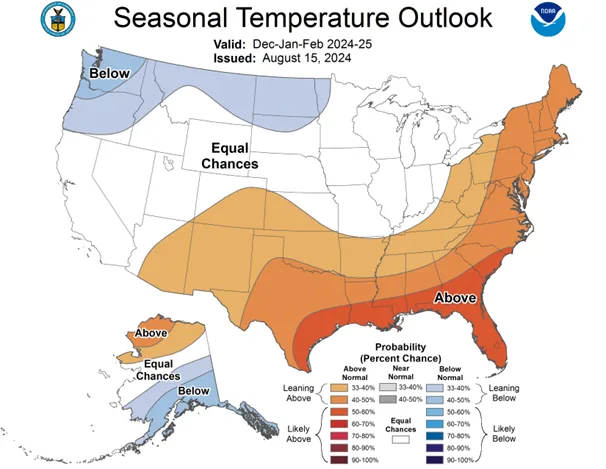
NOAA’s winter weather outlook published September 12, 2024 indicates favorable conditions (71% likelihood) for a short, weak La Niña to appear this fall - starting in the September-November range and lasting until March 2025. If this pattern emerges, distributors operating along the Gulf, southeastern, and mid-atlantic coasts are projected to experience above average temperatures. Above normal temperatures are also likely in the inland portions of Eastern, Central, Mid-Atlantic, and Great Lakes states. Moving across the country, the northern parts of the Central and Western regions are forecasted to experience colder than average temperatures this winter.
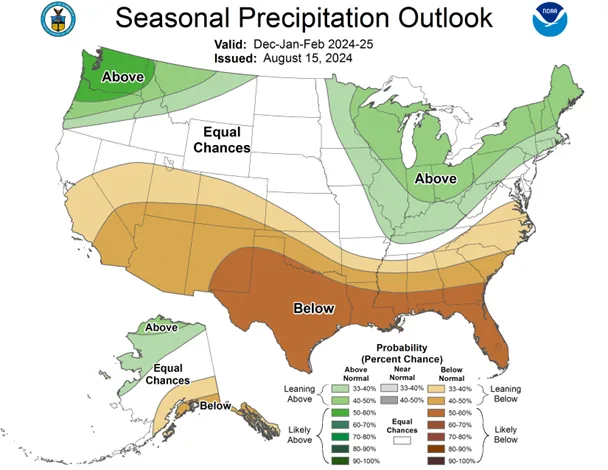
As for precipitation, large portions of the South and Southwest can expect below average precipitation while the Midwest, Mid-Atlantic and Western regions can expect higher than average precipitation.
Winters of 2020-2023 were a rare 3 year La Niña period that was finally broken by the El Niño pattern we saw last winter. Every region had fewer total heating degree days than normal during November-March last year, which will set up portions of the Great Lakes, Central states, and most of the Western region – the portions of the U.S. with 50/50 and greater odds for colder than normal temperatures this winter – for more favorable business performance than last year. Southern states predicted to have above average temperatures this winter should expect similar conditions once again.
Distributors should be aware of how these climate patterns affect demand in their areas and plan accordingly going into heating season. Seasonal outlooks and updates regarding other major weather phenomena can be found at NOAA’s Climate Prediction Center.
HARDI's Market Intelligence
Never miss any of the latest articles or reports from HARDI's Market Intelligence team, by following along with HARDI's blog. Read more Market Intelligence articles from HARDI's Blog.
Check out what HARDI's team can offer you with these Market Intelligence solutions.
Tags:

Tyler Drown
Former Quantitative Research Analyst at HARDI
Tyler previously served as an analyst on the Market Intelligence team, where he used his background in economics and statistics to deliver content on market insights that helped members make informed, data-driven decisions.