HR & Training
Assessing Your Associates' Talent and Development
September 25, 2024 | 7 minute read

As I have had the opportunity to meet with many of our members, the discussion topic is how to engage and retain their associates. The key to that success is to take a step back and discuss what they want to do in their career. Some associates may be happy in their current role, and others may want to take on additional responsibilities or other positions within the company. In any of these scenarios, you, as the leader, must provide the right level of development to keep that associate engaged in the company.
Purpose of a Career Conversation
Leaders should meet with their associates outside the regularly scheduled touchbases and performance appraisal process to discuss their career aspirations. The importance of having meaningful ongoing career conversations with your associates continues to develop a culture of engagement. As a leader, you should know your associate’s developmental goals and career specifications and help them connect with the organizational needs, future job openings, and learning opportunities. The leader's role in these conversations is guiding, supporting, and engaging their associates to plan their career development. Collaborating with them to identify purposeful activities, challenges, and learnings is the best approach when developing your associate.
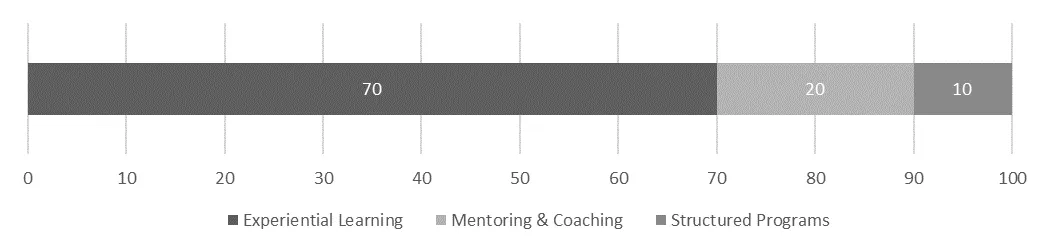
Your associate’s development should reflect experiential learning, projects, conversations, coaching, mentorship, and formal education. Use the ratio below for the best results.
Benefits of a Career Conversation
Career conversations allow you as a leader to reflect on your associate’s unique skills and competencies, highlight career opportunities, and cultivate an environment of growth. Effective career conversations assist leaders in clearly identifying successors for roles and positions on their team and others in the organization. Additional benefits include:
Increases associate engagement and retention
Aligns organizational needs and associate’s goals
Creates awareness of career paths and growth opportunities
Enables you to advocate for your associate
How to Prepare for a Career Conversation
You must be prepared for the Career Conversation with your associate as a leader. Ensure that you have communicated to your associate the goal of the meeting by sharing with them that the focus of the conversation will be on growth and development and that you are there to support them in reaching their career goals. It would be best to let them know it will be a dialogue, not a monologue. You want them to feel free to share their thoughts, aspirations, and any challenges they might be facing so that you can work together to create a plan for them to achieve their professional goals. Keep in mind the following items as well:
Make yourself available for the conversation
Assess the associate’s skill and competency strengths and areas of development
Identify examples of when they displayed that competency or could have used that competency more effectively to complete a project or business item
Review the feedback and coaching you have provided
Consider other roles you see the associate growing into next
Determine the skills and competencies this associate would need to focus on to move to the next
During the Career Conversation
It would help if you emphasized that the conversation will be about the associate, their career aspirations, development, and how you can support them in this journey. You should set the tone of the meeting that you want to hear from them what they would like to accomplish in the near and long term and where they feel they could benefit from more growth or experience. Speaking with the associate about this is an opportunity for the two of you to map the next steps in their career and let them know that you are there to help guide and support them through this process. Take the following into account:
Listen, show interest, and ask questions to ensure you understand the associate
Remain open and objective to the associate’s goals and career aspirations
Identify specifics about what they can do to prepare for that next role
If there is a role they haven’t identified as a potential fit for their skillset, introduce it into the dialogue and listen to their response
Provide feedback on the strengths and areas of development
Be prepared to share additional insight on other competencies that may not have been identified, and examples of behaviors that have been exhibited
Be supportive but realistic when advising the associate on potential career opportunities
Avoid talking about other topics – this isn’t a project check-in or performance appraisal
Discuss next steps that will aid in your associate’s career journey
Take notes and recap the conversation. Ask questions to check for understanding and confirming the next steps
Post the Career Conversation
Leaders should follow up on the next steps identified during the conversation and set the stage for a future discussion. It would be best if you shared that you are available other times to continue the conversation. Be mindful of the following items:
Review established next steps in upcoming touch-base meetings
Provide ongoing feedback and coaching to the associate
Thought Starter Career Conversation Questions
Leaders can use the following thought-starter Career Conversation questions to keep the dialogue going in the meeting. It is important that you review these in advance as you prepare for the actual Career Conversation.
Experiences, education, and accomplishments
What are some significant points in your career? Why?
What work experience are you recognized for the most?
What would you describe as your biggest strength?
What do you think is your most significant area for improvement?
What education, certifications, or formal learnings have increased your skills and prepared you for a future career opportunity?
How can you accelerate your learning?
What do you like to do most about your role, and what don’t you like to do?
Self-Reflection
What are your capabilities?
What critical skills are in your current role, and how would you rate yourself?
What feedback have you been provided about work performance?
Who else can/has provided feedback about work performance?
Which skills and competencies are valued by the team and organization? Which of these are your strengths? Which are areas to improve on?
Future Interests
What are your aspirations? What type of work do you want to focus on next?
Which goals are realistic in the short term, and which are long-term goals?
How long do you believe it will take you to achieve these goals? How will you track milestones along the way?
How is the world of work changing? What are industry trends, and how can your skills evolve with the organization?
Would you consider lateral moves to accomplish your long-term career goals?
Would you consider taking a step back in job level to accomplish your long-term career goals?
Engage and Retain Teams with Talent Development Resources
Active involvement in career conversations is essential for retaining and engaging talent. Let your team members know you want to prioritize intentional career discussions, setting the foundation for a sustainable and successful partnership. Connecting with them, understanding their goals, and showing support, you help them feel valued. Proactively initiating these conversations fosters a sense of purpose and engagement, positively shaping their career growth within the organization.
HARDI provides our members with best-in-class training programs, both public and private, and customized eLearning programs relevant to the HVACR industry. If you’d like to learn more about these programs to engage and retain your associates or discuss how to attract, recruit, or hire associates, contact HARDI’s Talent Development Team.

Stella Keane
Vice President of Training, People, and Organizational Effectiveness
Stella Keane is the Vice President of Training, People, and Organizational Effectiveness. She's responsible for HARDI's Training & Development team, human resources, organizational development, finance, and operations functions. She brings over thirty years of Human Resources experience to the association and has managed best-in-class strategies and programs for talent readiness, succession planning, leadership development, and cultural engagement.