Advocacy
HARDI State Issues: New York State Fossil Fuel Ban in 2026
August 9, 2024 | 7 minute read
About
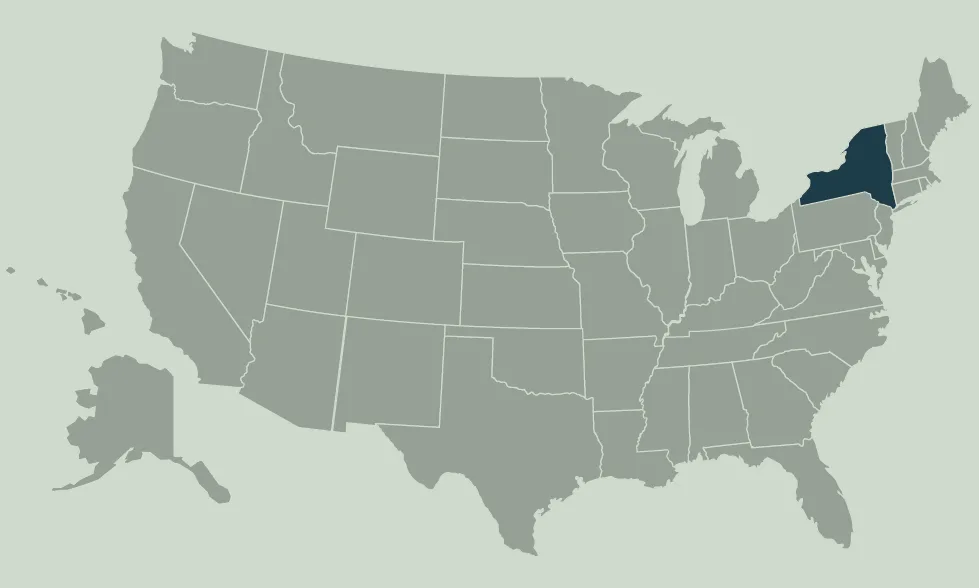
In May 2023, New York Governor Hochul signed bill S4006, a state budget bill that became the first legislation to change the building code to ban fossil fuel in new construction buildings. S4006 amends the State Energy Conservation Construction Code. New York Energy Law Gi 11-104 subdivision 6 in an attempt to achieve New York's clean energy and climate agenda as set forth by the New York State Climate Leadership and Community Protection Act. Additionally, New York City has also passed its own ban on fossil fuels in new construction.
Relevant Definitions
Fossil Fuel Equipment: Equipment that uses fossil fuel for combustion, including natural gas and propane furnaces, water heaters, boilers, stoves, and ovens.
Fossil Fuel Building System: Systems associated with a building that will be used for or to support the supply, distribution, or delivery of fossil fuel for any purpose, other than for use by motor vehicles.
Manufactured Home: A structure, transportable in one or more sections, which, in the traveling mode, is eight body feet or more in width or forty body feet or more in length, or, when erected on site, is three hundred twenty or more square feet, and which is built on a permanent chassis and designed to be used as a dwelling with or without a permanent foundation when connected to the required utilities, and includes the plumbing, heating, air-conditioning, and electrical systems contained therein.
Compliance Date for Fossil Fuel Prohibitions
New York State. except New York City
Existing Buildings and Appliances
Existing buildings and Appliances are NOT affected by this ban.
New Construction Buildings
Beginning January 1, 2026, any new construction building seven stories or under is not permitted to install fossil fuel equipment and building systems.
Exemption:
Large commercial or industrial buildings that are 100,000 square feet or more are exempt from requiring to comply with S4006's fossil fuel ban.
Generation of emergency backup power and standby power systems.
A manufactured home.
A building or part of a building that is used as a manufacturing facility, commercial food establishment, laboratory, car wash, laundromat, hospital, critical infrastructure, pumping facilities, agricultural building, fuel cell system, or crematorium, as terms are defined by code council.
Beginning January 1, 2029, ALL new construction buildings are not permitted to install fossil fuel equipment.
Exemptions:
Generation of emergency backup power and standby power systems.
A manufactured home, as defined above.
A building or part of a building that is used as a manufacturing facility, commercial food establishment, laboratory, car wash, laundromat, hospital, critical infrastructure, pumping facilities, agricultural building, fuel cell system, or crematorium, as terms are defined by code council.
New York City
New York City Local Ordinance Bans Gas Hookups in New Buildings
Beginning January 2028, all buildings within New York City must be constructed fully electric.
Exceptions:
Buildings seven stories or greater, with an application approval of construction documents submitted on or before July 1, 2027.
Buildings less than seven stories, with an application approval of construction documents submitted on or before December 31, 2023.
A building, other than a building that is classified as group R-3, where such emissions are in connection with the provision of hot water and an application for the approval of construction documents is submitted on or before July 1, 2027.
Buildings less than seven stories, that have fifty percent or more dwelling units within the building subject to a federal, state, or local affordable housing agreement; And an application approval of construction documents submitted on or before December 31, 2025.
Buildings seven stories or more, that have fifty percent or more dwelling units within the building subject to a federal, state, or local affordable housing agreement; And an application approval of construction documents submitted on or before December 31, 2027.
A building that will be primarily used by a utility regulated by the Public Service Commission for the generation of electric power or steam.
A building within a facility operated by the Department of Environmental Protection that treats sewage or food waste.
An application filed by or on behalf of the school construction authority submitted before December 31, 2024.
A building where fossil fuel is necessary for a manufacturing use or purpose, or the operation of a laboratory, laundromat, hospital, crematorium, commercial kitchen, used for emergency or standby power, or other use allowed by rule of the department, to the extent necessary for, and in the space occupied by such use or purpose.
Fossil Fuel Ban Effect on the HVACR Industry
As a distributor, the legislation will change the inventory needed for contractors to comply with the new construction electrification. Especially for January 2029 and beyond, when the exemptions are much stricter. Although some exemptions will apply, distributors should work with contractor customers, engineers, and designers on education to ensure they are aware of the compliance requirements. Distributors primarily working in the replacement market will be less likely to be impacted than distributors working in the new construction market. Each distributor affected by S4006 must evaluate their inventory needs as the law is implemented. The local building officials are responsible for enforcing the changes outlined in S4006 and will only approve permits for buildings that comply with its requirements. Therefore, it is recommended to communicate with contractor customers to ensure they are aware of the ban. By doing so, as the distributor, you will have fulfilled your responsibilities and protected your business in case the equipment is installed in violation of the ban.
It is worth noting that a similar regulation was implemented in Berkeley, California, and was nullified by the U.S. Court of Appeals for the Ninth Circuit. The court invalidated a City of Berkeley prohibition on natural gas infrastructure in new construction buildings. The prohibition was commonly known as the "natural gas ban" and was the first local
ordinance in the country to require all-electric construction of new buildings. The court decided that the "natural gas ban" violates the authority of the Energy Policy and Conservation Act (EPCA), which gives the federal government the authority to set energy-efficiency standards for products. Circuit Judge Bumatay stated, "that once a federal energy conservation standard [EPCA] becomes effective for a covered product, no State regulation concerning the energy efficiency, energy use, or water use of such covered product shall be effective with respect to such product." Thus, based on the U.S. Court of Appeals for the Ninth Circuit's ruling, a legal challenge is likely to occur from the S4006 fossil fuel ban in new construction buildings.
Please click here for the complete New York S4006 language.
As electrification begins to be more popular, please remember that New York has rebates for heat pumps available through their IRA HEAR program. Distributors can view all the information needed for contractors to access these rebates on the HARDI IRA Toolkit.
Want to learn more about State Issues?
HARDI's Advocacy efforts are centered around specific key issues relevant to the HVACR industry, wholesale distribution, and family & small businesses. To educate elected officials on legislative and regulatory issues that specifically affect the HVACR industry, HARDI aims to keep members informed and up to date on the latest news impacting our industry.
Explore more State Issues like this one on HARDI's State Issues page.
Contact Todd Titus, Director of State and Public Affairs, with additional questions.
Tags:

Todd Titus
Director of State Government Affairs
Todd Titus, J.D. is HARDI's Director of State Government Affairs. As the lead of HARDI's new state affairs department, Todd monitors legislative and regulatory issues across all 50 states to inform HARDI membership about the legislation that impacts the industry. Along with informing membership of key issues, Todd also spearheads grassroots initiatives, advocates before elected officials, and networks in person with relevant stakeholders.

You might be interested in...