Advocacy
EPA Creates Install Date Requirement for Equipment Using High-GWP Refrigerants
October 10, 2023 | 6 minute read
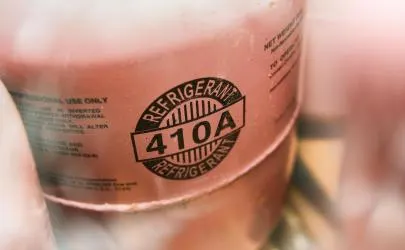
The Environmental Protection Agency (EPA) has finalized its technology transition rule with a confusing set of definitions that create an install date deadline for all equipment using high-GWP refrigerants. Information about the rule is coming out from various sources, and HARDI wants to make sure members are aware of the rule and what it could potentially mean for your businesses. The pre-publication version of the final rule was released on Friday, and we are asking the EPA for clarification about the rule before it is published in the Federal Register, at which point it will become law. HARDI needs your feedback on how this rule, if it remains unchanged, will impact your business, please fill out this survey.
Quick summary:
The EPA will require all split systems using refrigerants above 700GWP (including R-410A) to be installed before January 1, 2025, additional dates and GWP limits for chillers and commercial refrigeration below.
Self-contained units, like window units, have a manufacturing prohibition for refrigerants above 700GWP on January 1, 2025, with a three-year sell-through, additional dates and GWP limits for chillers and commercial refrigeration below.
Components for repair and retrofit can still be manufactured and sold, all installed equipment can be repaired as long as it is economically feasible.
Background:
The EPA has split all products using HFCs in the refrigeration, air conditioning, and heat pump sector into two categories: products and systems. The agency has set up two different but consistent compliance regimes depending on whether a piece of equipment is considered a product or a system. Based on the definitions and the descriptions provided by EPA, products include units with a complete refrigerant circuit, including reach-in coolers, automatic ice machines, stand-alone retail food refrigeration, and package AC or heat pump units. In contrast, systems require installation, including completing the refrigerant circuit and adding at least some refrigerant; examples include split-system AC and heat pumps, industrial process refrigeration, and built-in retail food refrigeration. The rule would also create an export ban on products after the sell-through deadline, meaning there is no method to sell the remaining inventory after the compliance deadline.
EPA has made it clear that repairs to existing systems or retrofits to change refrigerants in existing systems are not prohibited by the rule. This means parts and components for repair can still be manufactured, imported, sold, or exported past the compliance deadline. This would allow components of cooling and refrigeration systems not already installed to be sold for repairs but not for new installations.
Below is a table of systems having an install date compliance deadline released by the EPA with the pre-publication version of the rule (a separate table of products is also available; however, unitary products are not considered products based on the descriptions provided):
Subsector | System | Global Warming Potential Limit or Prohibited Substances | Installation Compliance Date(5) |
Stationary residential and light commercial air conditioning and heat pumps | Residential and light commercial air conditioning and heat pump systems (e.g., mini-splits, unitary systems) | 700 | January 1, 2025 |
Stationary air conditioning and heat pumps | Variable refrigerant flow systems | 700 | January 1, 2026 |
Chillers | Industrial process refrigeration with exiting fluid below -50 °C (-58 °F) | Not covered | Not covered |
Chillers | Industrial process refrigeration with exiting fluid from -50 °C (-58 °F) to -30 °C (-22 °F) | 700 | January 1, 2028 |
Chillers | Industrial process refrigeration with exiting fluid above -30 °C (-22 °F) | 700 | January 1, 2026 |
Chillers | Comfort cooling | 700 | January 1, 2025 |
Ice rinks | Ice rinks | 700 | January 1, 2025 |
Data centers, computer room air conditioning, and information technology equipment cooling | Data centers, computer room air conditioning, and information technology equipment cooling | 700 | January 1, 2027 |
Industrial process refrigeration (not using chillers) | With 200 or more lb refrigerant charge excluding high temperature side of cascade system and temperature of the refrigerant entering the evaporator above -30 °C (-22 °F) | 150 | January 1, 2026 |
Industrial process refrigeration (not using chillers) | With less than 200 lb refrigerant charge and temperature of the refrigerant entering the evaporator above -30 °C (-22 °F) | 300 | January 1, 2026 |
Industrial process refrigeration (not using chillers) | High temperature side of cascade systems and temperature of the refrigerant entering the evaporator above -30 °C (-22 °F) | 300 | January 1, 2026 |
Industrial process refrigeration (not using chillers) | Temperature of the refrigerant entering the evaporator from -50 °C (-58 °F) to -30 °C (-22 °F) | 700 | January 1, 2028 |
Industrial process refrigeration (not using chillers) | Temperature of the refrigerant entering the evaporator below -50 °C (-58 °F) | Not covered | Not covered |
Cold storage warehouses | With 200 or more lb refrigerant charge, excluding high temperature side of cascade system | 150 | January 1, 2026 |
Cold storage warehouses | With less than 200 lb refrigerant charge | 300 | January 1, 2026 |
Cold storage warehouses | High temperature side of cascade system | 300 | January 1, 2026 |
Retail food - supermarkets | With 200 or more lb refrigerant charge, excluding high temperature side of cascade system | 150 | January 1, 2027 |
Retail food - supermarkets | With less than 200 lb refrigerant charge | 300 | January 1, 2027 |
Retail food - supermarkets | High temperature side of cascade systems | 300 | January 1, 2027 |
Retail food - remote condensing units | With 200 or more lb refrigerant charge, excluding high temperature side of cascade system | 150 | January 1, 2026 |
Retail food - remote condensing units | With less than 200 lb refrigerant charge | 300 | January 1, 2026 |
Retail food - remote condensing units | High temperature side of cascade system | 300 | January 1, 2026 |
Retail food - remote refrigerated food processing and dispensing equipment | Retail food - remote refrigerated food processing and dispensing equipment | R-402A, R-402B, R-404A, R-407A, R-407B, R-407C, R-407F, R-407H, R-408A, R-410A, R-410B, R-411A, R-411B, R-417A, R-417C, R-420A, R-421A, R-421B, R-422A, R-422B, R-422C, R-422D, R-424A, R-426A, R-427A, R-428A, R-434A, R-437A, R-438A, R-507A, HFC-134a, HFC-227ea, R-125/290/134a/600a (55/1/42.5/1.5), RB-276, RS-24 (2002 formulation), RS-44 (2003 formulation), GHG-X5, Freeze 12 | January 1, 2027 |
Remote automatic commercial ice machines | Remote automatic commercial ice machines | R-402A, R-402B, R-404A, R-407B, R-408A, R-410B, R-417A, R-421A, R-421B, R-422A, R-422B, R-422C, R-422D, R-424A, R-428A, R-434A, R-438A, R-507A, R-125/290/134a/600a (55/1/42.5/1.5), RS-44 (2003 formulation), GHG-X5 | January 1, 2027 |
(5) EPA is restricting the installation of new field-assembled systems. Components used to repair existing systems are not subject to these restrictions.
HARDI is asking member distributors to complete this survey to provide feedback on the rule and it’s impact on member businesses. We are also working with industry allies to seek clarification of the rule from the EPA. We are hopeful that the EPA is willing to make corrections to the final rule, however the inclusion of the requirement means it is likely to still impact at least some products even if corrections are made.

Alex Ayers
Vice President of Government Affairs
Alex is HARDI’s lead lobbyist and regulatory expert, with over a decade of experience in Washington, DC. A former Iowa caucus delegate, he built early roots in grassroots politics. He has lobbied, published, and testified on taxes, energy, environment, agriculture, and economics. His work has been cited by the Wall Street Journal, Forbes, and the Tax Foundation.

You might be interested in...