Market Intelligence
Mostly Sunny with a Lot of Cloud Computing: 2023 Data Center Outlook
April 20, 2023 | 6 minute read
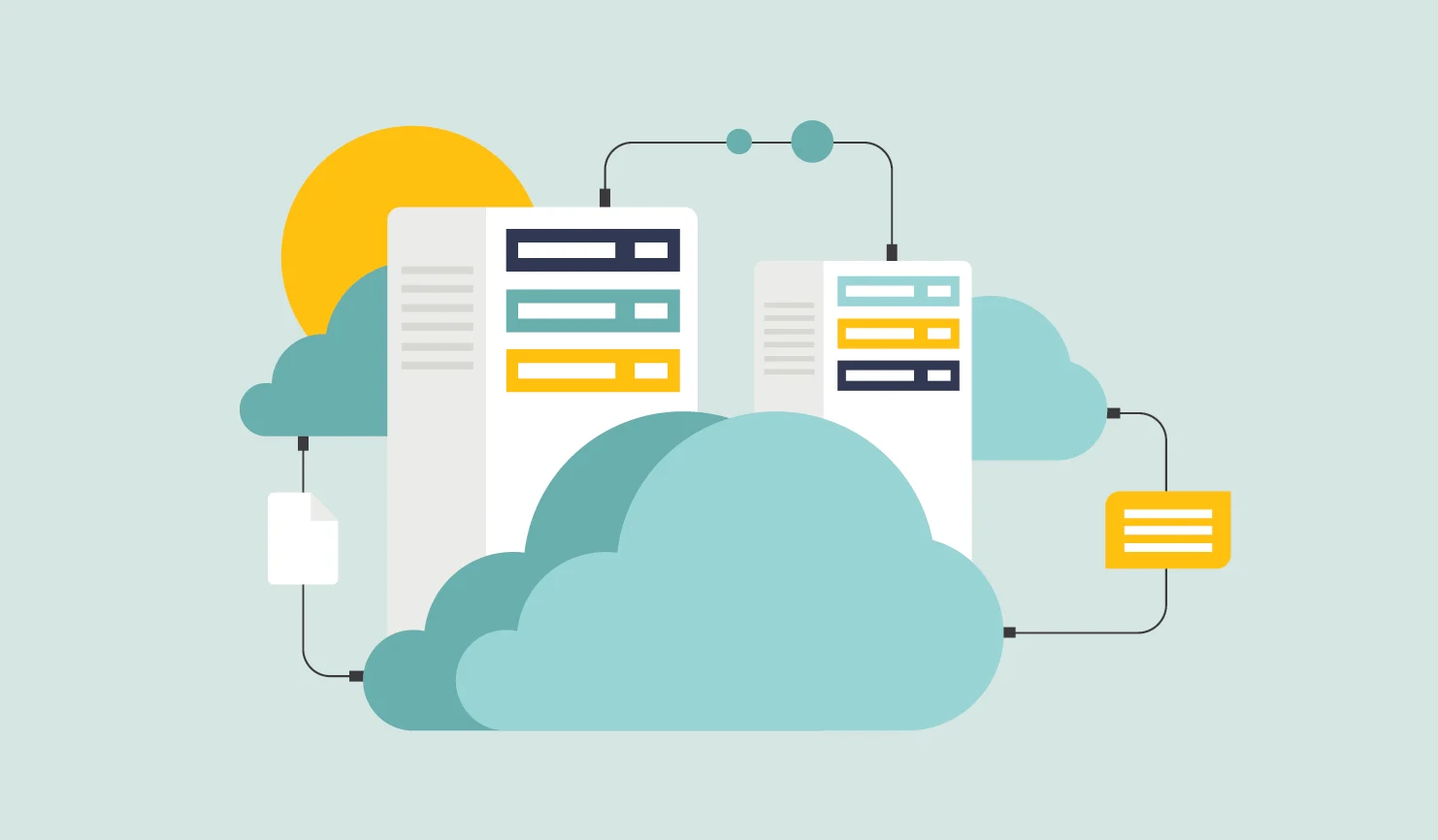
With the increasing popularity and technological advances of cloud computing over the last twenty years, data centers have become an integral part of the economy. Between 2012 and 2018, the number of physical data center locations grew 20 percent, becoming an important component of annual nonresidential HVAC/R demand.[i] Interestingly, despite the growth in secular trends that serve as a tailwind for data center development, leasing activity among existing data centers has been in decline since the end of 2020. Likewise, the overall volume of new data centers being delivered to the market declined by 17 percent through Q4 2022 (while the quantity of buildings under construction had grown by 12 percent). The charts below, taken from our recent State of the Channel report, show these trends more fully.
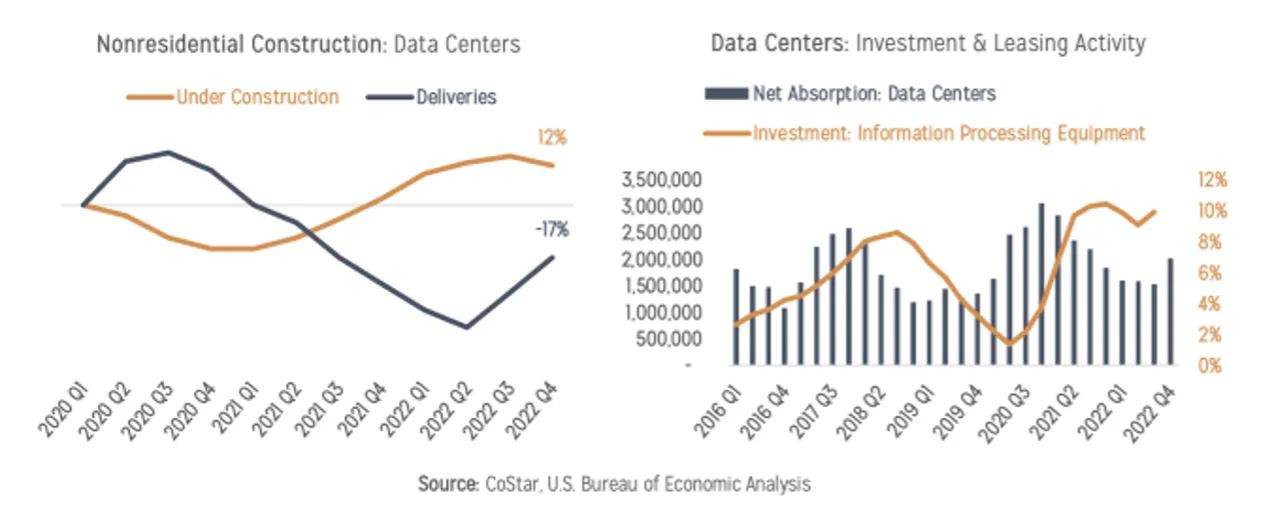
Supply chain challenges and labor issues explain much of the recent slowdown in leasing activity and building deliveries, and we expect demand to grow in the year ahead. However, the market’s ability to meet that demand is ultimately constrained by two primary factors: power (electricity) and space (new construction and rent). These market constraints will dictate the types of data centers that will be most in demand - hyperscale data centers will see softening demand while demand for other types of data centers will grow. In the paragraphs that follow, we provide an in-depth discussion of the types of data centers; a closer look at the factors affecting hyperscale data center construction, and the implications on HVAC/R demand from the shift from hyperscale to other data centers.
Types of Data Centers
Most people think of large facilities with rows and rows of servers when it comes to data centers. However, there are multiple types of data centers with unique network needs. We discuss four primary types of data centers below to help members better understand the shift in the data center market. The four types of data centers that we’ll cover are hyperscale, enterprise, colocation, and edge/micro data centers.
Hyperscale Data Centers
Hyperscale data centers are the facilities as described above. Hyperscale data centers are utilized by tech giants such as Amazon, Microsoft, Google, and Meta etc. These companies require large amounts of space and power to handle scaling across thousands of servers (Microsoft reported that Google uses around 900,000 servers). Hyperscale end-users have leased specific floors within a building to purchasing land and building large facilities. Facilities may use up to 50 megawatts of power when deploying racks. These companies do not involve or allow other companies to connect inside their data facilities. They typically utilize nearby smaller colocation spaces, allowing companies to connect.
Enterprise Data Centers
Enterprise data centers are privately owned data centers that support one organization. These centers are specifically designed and built to meet the organization’s specific data needs. They are typically located at or near the site of the organization. Some organizations choose a separate location, but more often than not centers are located at the same site. The organization’s in-house IT staff are responsible for maintaining the center.
Colocation Data Centers
Colocation data centers are utilized when businesses want to host their servers offsite. These centers are most often utilized when companies and organizations do not have space or resources to build their own enterprise data centers. Colocation end-users lease the space needed to host their data. They also allow end-users to scale according to their needs. Put simply, they can scale up or down if needed.
Edge/Micro Data Centers
These types of data centers are small. They are located at the site to allow real-time data analysis and processing. Edge centers allow for immediate communication to enhance customer experiences.
A Closer Look at Commercial Electricity Prices and New Construction/Rent Costs
Commercial Electricity Prices
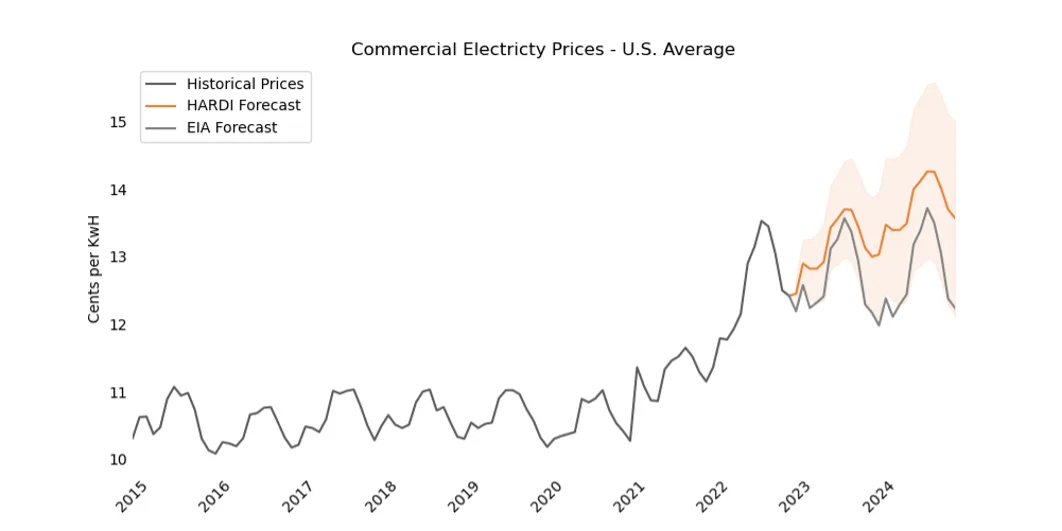
Commercial electricity prices began rising in late 2021 and peaked in Q3 2022. Forecasts from HARDI and the EIA Short Term Energy Outlook show that elevated commercial prices are expected to continue in 2023 through 2024 (as seen in the graph below).
Construction/Rent Costs
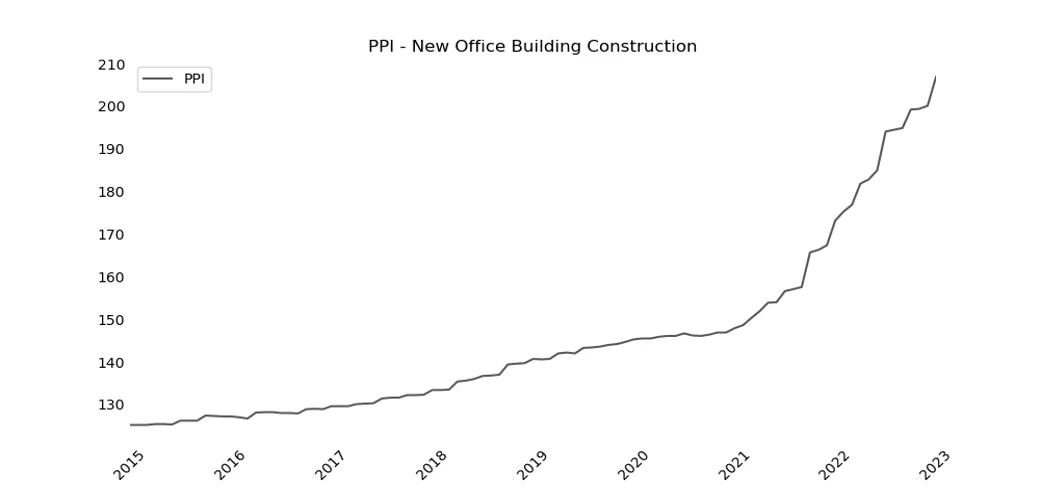
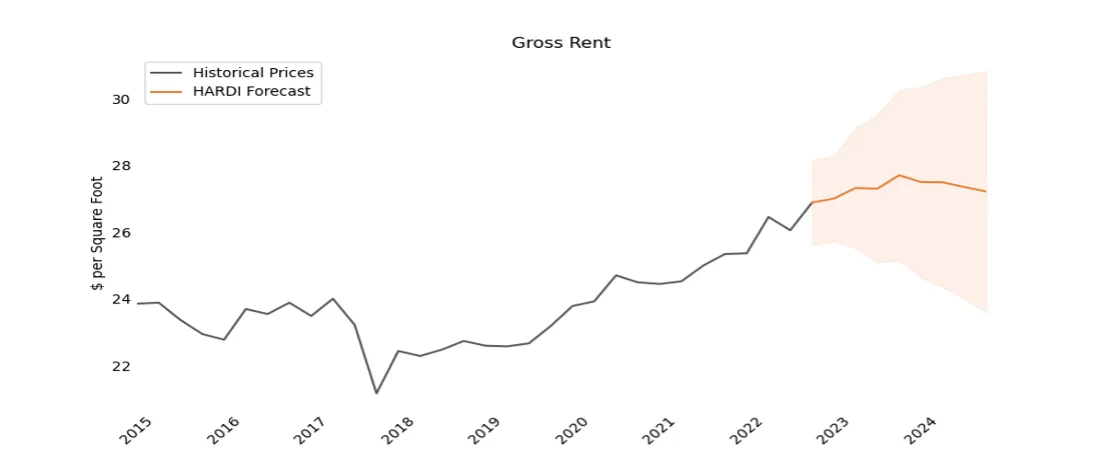
Although shortages of materials and labor have caused a steep increase in the price of new office buildings during the last two years (as shown by New Office Building Construction PPI), rent prices for existing data centers have seen only a modest increase over the same period and are not forecasted to increase drastically over the next two years (Gross Rent graph). These factors will contribute to the slowing of demand for hyperscale data centers which typically would rely on new construction while having a relatively smaller effect on other types of data centers which may opt to rent preexisting spaces.
Implications
Hyperscale data center projects are expected to slow (compared to 2022) due to high inflation, rising interest, space availability, and utility costs. Some construction has been paused by large tech hyperscalers, which will result in some fluctuations in the market and delay growth at the beginning of 2023. However, this slowdown will be temporary. Renting activity in existing data centers is expected to increase due to the modest increase in pricing. This growth is expected especially among the utilization and establishment of colocation and edge/micro data centers in already existing data centers. Secondary markets are also expected to grow. For example, more and more data centers are being built outside of urban areas and have moved to the suburbs such as Northern Virginia and Chicago suburbs. Continued growth is also expected in second tier cities such as Denver, Pittsburgh, and Detroit.
Colocation centers are still housed in commercial buildings, however, these buildings are going to be in spaces ranging most often from 10,000 to 100,000 square feet compared to Microsoft’s 700,000 square foot or Google’s 500,000 hyperscale data centers. Hyperscale data centers have utilized precise and targeted cooling designs that rely on multiple CRAHs (computer room air handlers) and CRACs (computer room air conditioning units) or Liquid Cooled System designs. However, with the shift from hyperscale data centers to colocation centers, the cooling of these facilities does not have to be as targeted. Colocation data center jobs will utilize room-level systems such as CRAHs and CRACs or even rooftop units to manage thermal load. Therefore, with the increase in renting activity as shown above, jobs using cooling systems with CRAHs, CRACs, or rooftop units will grow along with servicing and troubleshooting this type of equipment.
[i] Commercial Buildings Energy Consumption Survey (CBECS). U.S. Energy Information Administration. https://www.eia.gov/consumption/commercial/

Keri Eason
Nonresidential Market Analyst

Tyler Drown
Former Quantitative Research Analyst at HARDI
Tyler previously served as an analyst on the Market Intelligence team, where he used his background in economics and statistics to deliver content on market insights that helped members make informed, data-driven decisions.