HR & Training
The Recruitment Problem: “No One Wants to Get Into the Trade”
April 10, 2023 | 6 minute read
As part of our annual Voice of Contractor survey and interview work, I’ve had the opportunity in recent months to sit down and listen to contractors’ perspectives on the HVAC/R market. Each contractor I spoke with was eager to share their knowledge and equally excited to discuss their businesses. As conversations went on, they became more candid and discussed their concerns. One contractor frankly said, “No one wants to get into the trade.” I use his quote because it reflects a major concern that everyone (distributors, manufacturers, and contractors – on varying levels) in the channel is and has been confronting for a number of years now.
The challenging labor market is not a new topic; however, the labor issues already visible within the HVAC/R industry were exacerbated by factors driven by the pandemic. Those factors include strong demand for HVAC/R equipment, a strained supply chain, and unusual labor market dynamics like the “Great Resignation” of 2021, where the quit rate jumped to 32.7% in the United States (Bureau of Labor Statistics 2021).
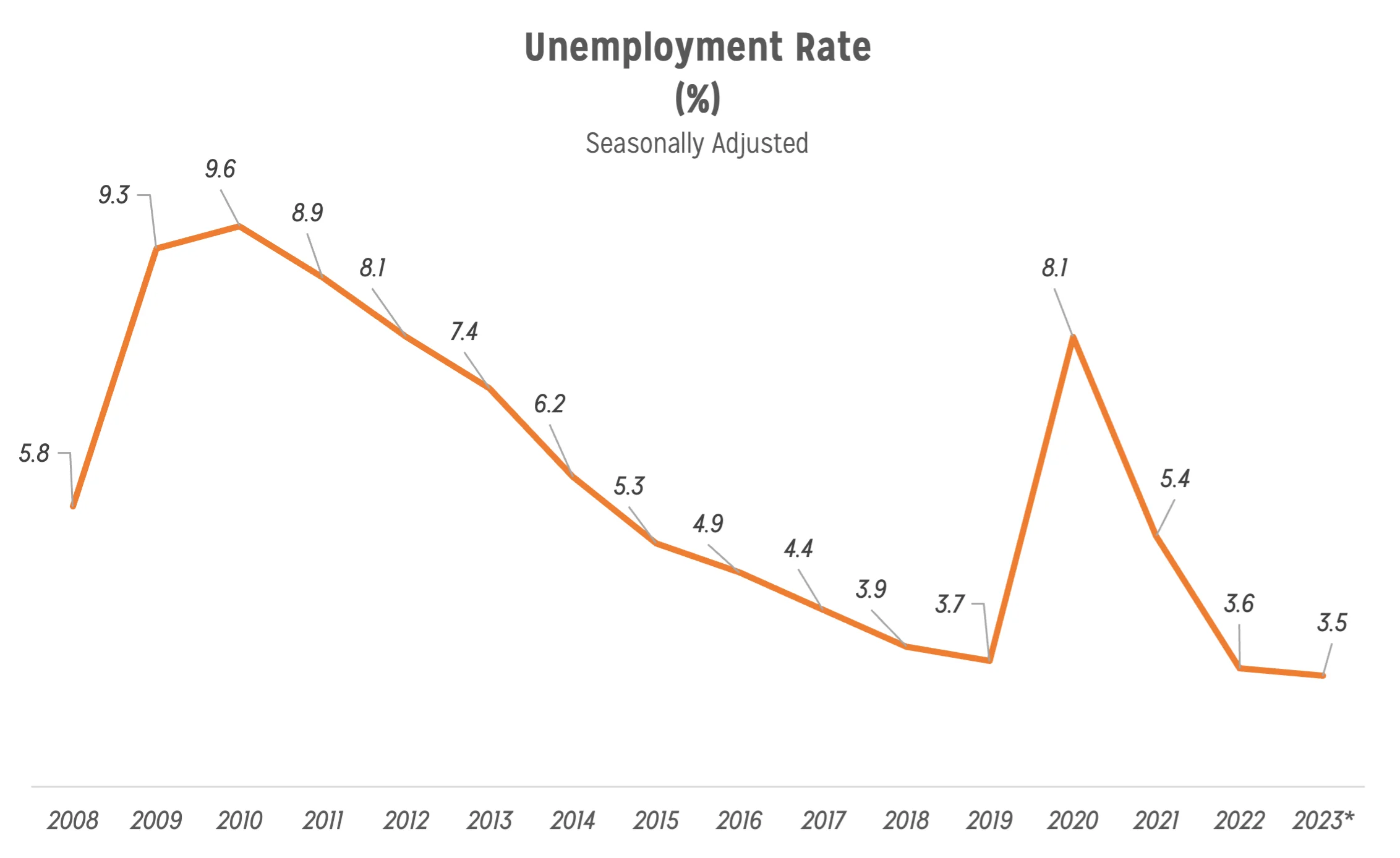
After spiking early in the pandemic, the unemployment rate has steadily improved (as shown in the graph above), now reaching below pre-pandemic levels. Despite improvements in both the unemployment rate and even the supply chain, HARDI members and their contractor customers are continuing to experience problems recruiting new talent and retaining current talent. This post shows current data from the Bureau of Labor Statistics, HARDI and Industry Insights’ Compensation & Benefits Survey, and the Voice of the Contractor survey to both provide a more in-depth discussion of talent concerns as well as highlighting some untapped labor markets for potential recruitment.
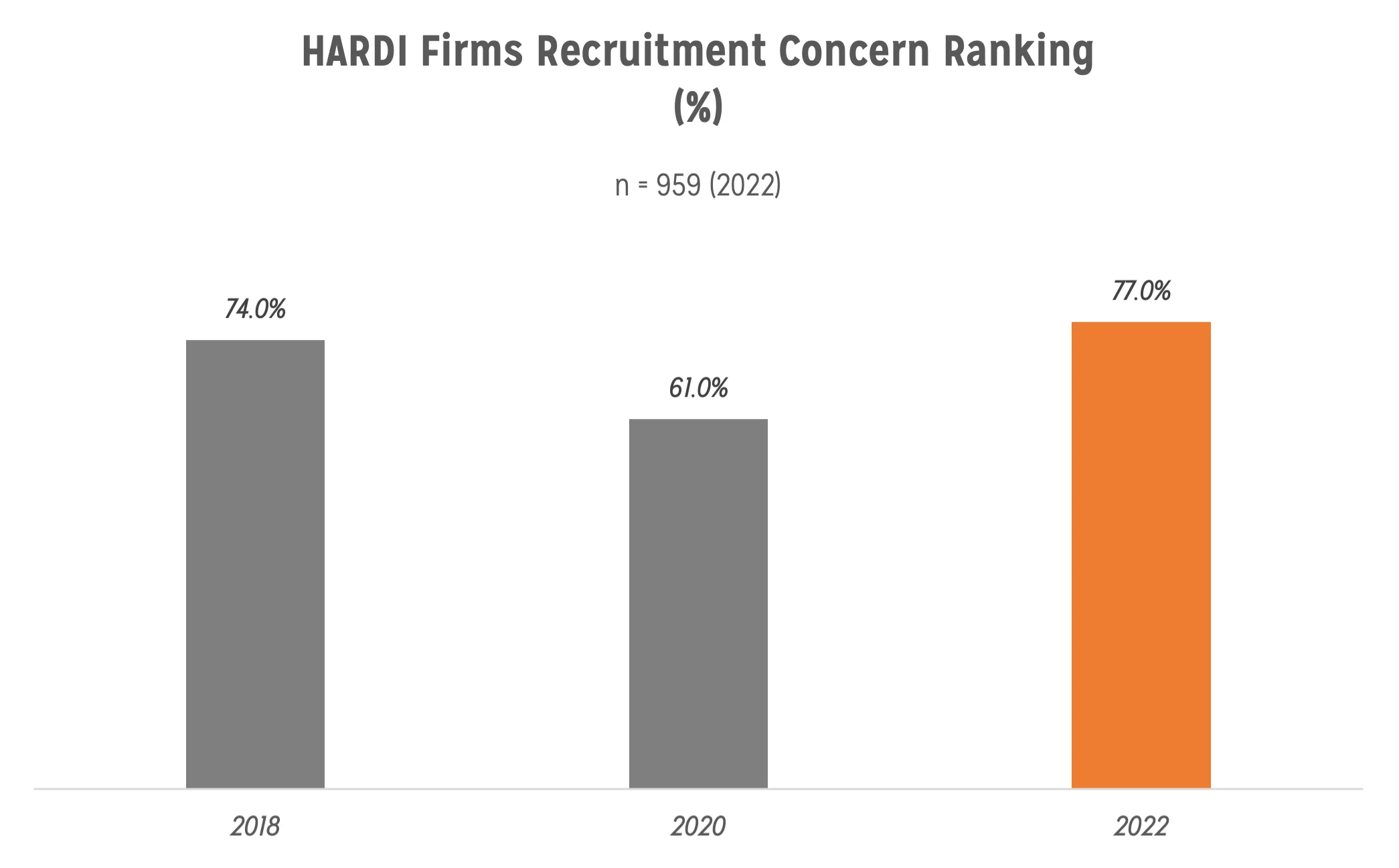
HARDI worked in tandem with Industry Insights to produce the 2022 Cross-Industry Compensation & Benefits Survey. The survey provides a comprehensive analysis of key compensation and benefits related statistics for the distribution industry (Cross-Industry Compensation & Benefits Survey 2022). The 2022 survey results show that recruitment, despite unemployment rates normalizing, remains a top concern – much as it had been in the years preceding the pandemic.
Composition of National Workforce
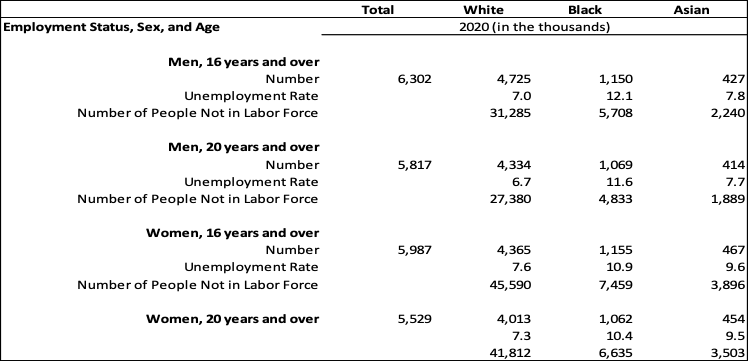
It is no wonder that distributors and contractors struggled to both recruit and retain workers during the pandemic. The unemployment rate reached unprecedented levels during 2020. Economists and government agencies alike presented daily figures. However, it is important to numerically contextualize and break down the actual numbers versus solely relying on the unemployment rate or the percentage of the labor force without a job. For example, Black men aged 16-years and older had the highest unemployment rate at 12.1 (a total of 1,150,000 Black men) in 2020. When looking at the same categories for White and Asian men, White men had the lowest unemployment rate with 7.0 percent followed by Asian men with 7.8 percent. Sheer numbers show that almost 5 million White men (16 years or over), over 1 million Black men (16 years or over), and 427,000 Asian men (16 years or over) were unemployed. Put simply, the unemployment ratio is based off of each population. Therefore, populations of Black and Asian men are significantly smaller compared to the population of White men in the United States as shown in the Table below.
The next table (below) shows both the unemployment rate and numbers by age group and race pulled from the Bureau of Labor Statistics for 2022. Black men still have the largest unemployment rate. When breaking down the total number of men, there is a total of 59,980,000 White men (31,959,000+28,021,000), 10,122,000 Black men (5,480,000+4,642,000), and 4,134,000 Asian men (2,238,000+1,896,000) who are not in the labor force. When it comes to women, there is a total of 52,919,000 White women, 9,158,000 Black women, and 4,463,000 Asian women who are not in the labor force.
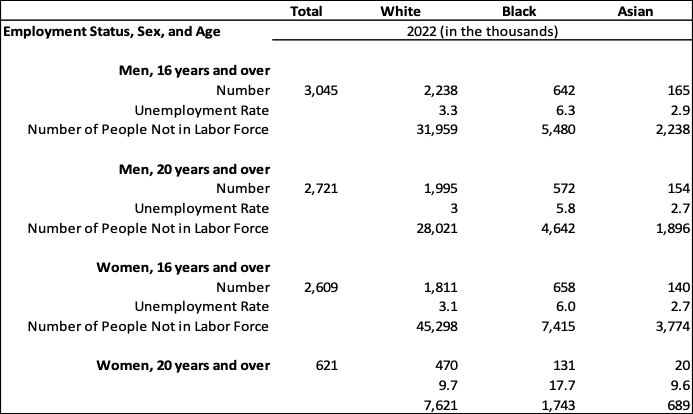
Composition Heating, Air Conditioning, and Refrigeration Mechanics and Installers Compared to National Workforce
The tables above provide some insights. First, they indicates that the labor market is growing and as mentioned above significantly better than 2020 levels. Second, it helps us see which groups are not participating in the labor force. However, this is only one piece to the labor force puzzle. The graphs below show how the percentages of HVAC/R mechanics and installers compare to the national percentages.
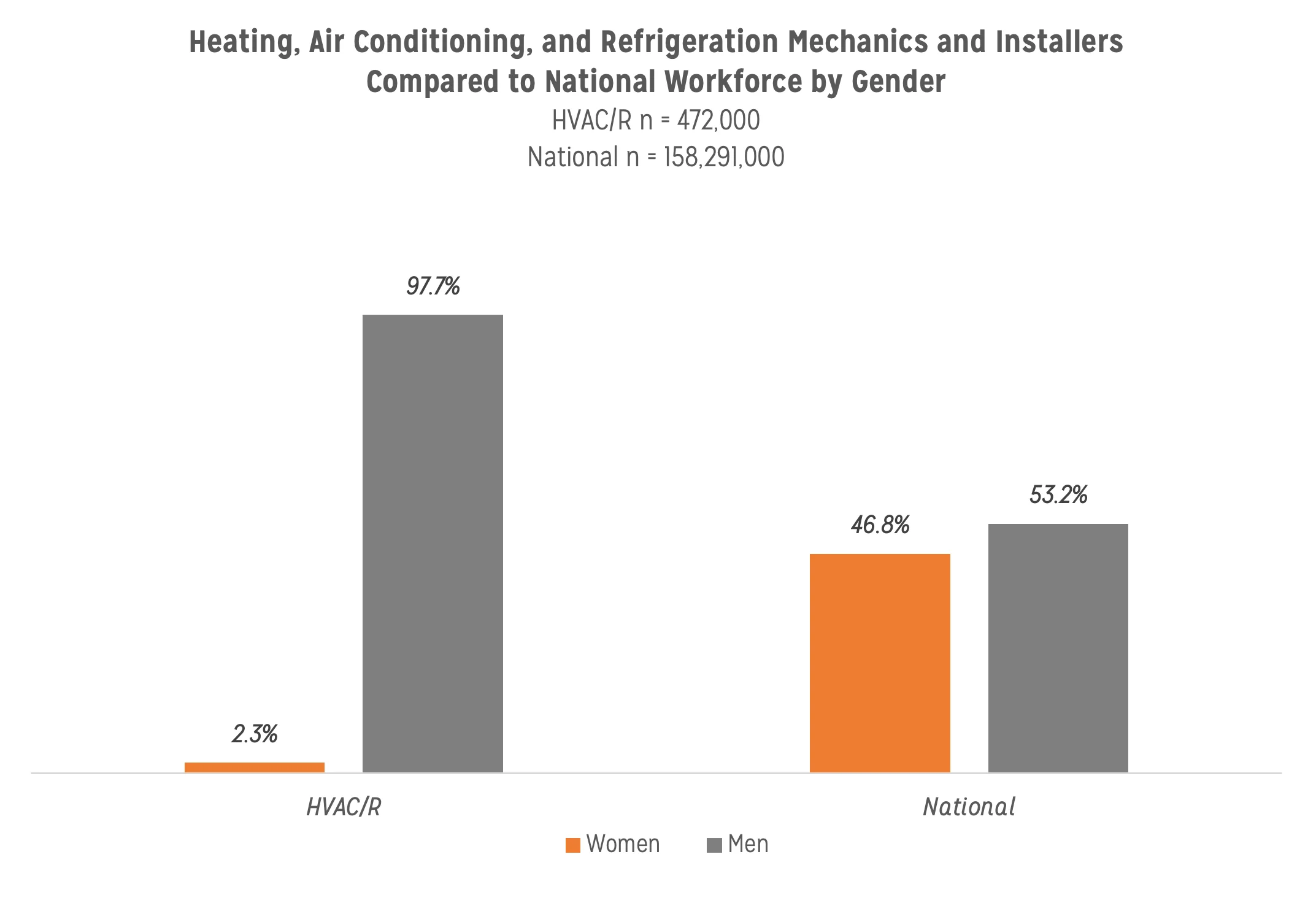
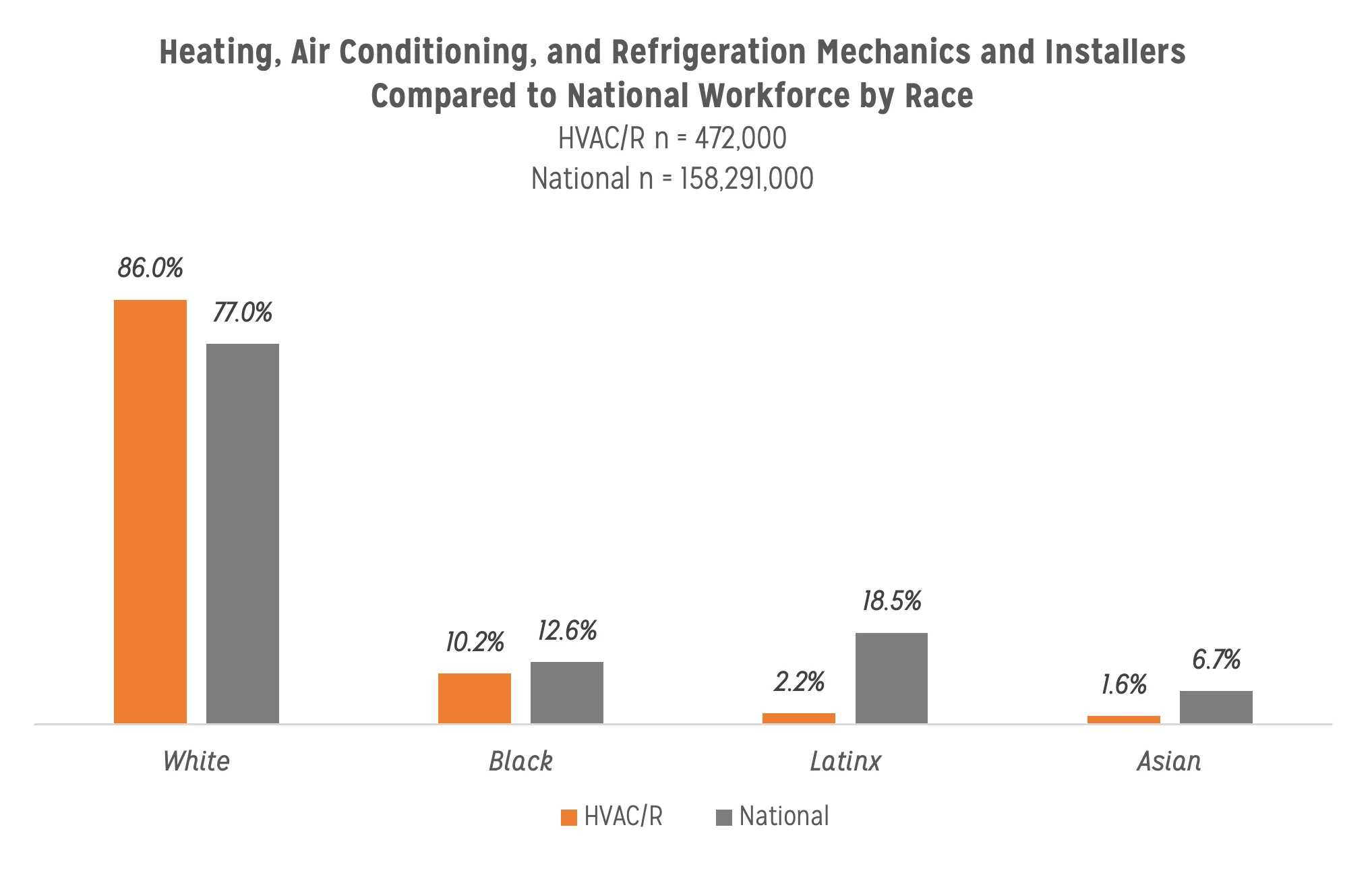
The graph above shows the percentage of both men and women in the HVAC/R Mechanics and Installers occupation on the left-hand side. The right side shows the national percentage of men and women in the workforce. Currently, women make up 2.3% of all HVAC/R Mechanics and Installers. When looking at the national percentage broken down by gender, one can see that percentages are almost equal. The graph below breaks down the HVAC/R and national workforces by race. The graph below shows that the HVAC/R industry more closely mirrors the national workforce when it comes to the recruitment of White and Black men. However, there is gap between the HVAC/R percentage of Asian workers and an even bigger gap when it comes to Latinx HVAC/R Mechanics and Installers.
So, What Does This All Mean?
The current percentages show that the unemployment rate is improving. However, the number of men 16 years and older still makes up the largest group not employed. When the number of men 16 years and older are broken down even further, the largest number of unemployed men are young White (31,959,000), Black (5,480,000), and Asian men (2,238,000). Young men (16 years and older, but younger than 20) are not the only people who are not participating in the labor force. Young women (16 years and older, but younger than 20) are the second largest group not participating in the labor force. These gender and age groups serve as untapped talent pools. Furthermore, there is a large gap between the Latinx HVAC/R Mechanics and Installers and the national percentage of Latinx workers in the labor force. This group along with the other groups have the potential to bring more talents and skills to businesses.
Recommendations
It is clear that there is not a quick fix to a complex issue such as the recruitment of new workers. I offer some potential recommendations for members to try as well as some that can be further developed.
One size does not fit all – The placement of recruitment online advertisements should be strategic. For example, placing ads online is key (placing ads LinkedIn or popular HVAC/R forums as well job sites such as Indeed, which allow businesses to post job ads in different languages such as Spanish).
Building partnerships with educational institutions – This can include local community and technical schools or high schools. For example, building partnerships with high schools that offer apprenticeship programs. Another example could be building partnerships with universities/colleges’ business and engineering/applied science programs.
Utilizing community resources – This can include networking and collaborating with nonprofits in the area such as Urban League or local Refugee groups to create a pipeline to HVAC/R jobs.
Creative incentives – Not every business can offer a sign-on bonus. Some businesses have offered vacation time and even Netflix subscriptions to entice workers.

Keri Eason
Nonresidential Market Analyst