Advocacy
HARDI State Issues: California Bulk Virgin Refrigerant Prohibitions, SB 1206 (2022)
August 9, 2024 | 6 minute read
About
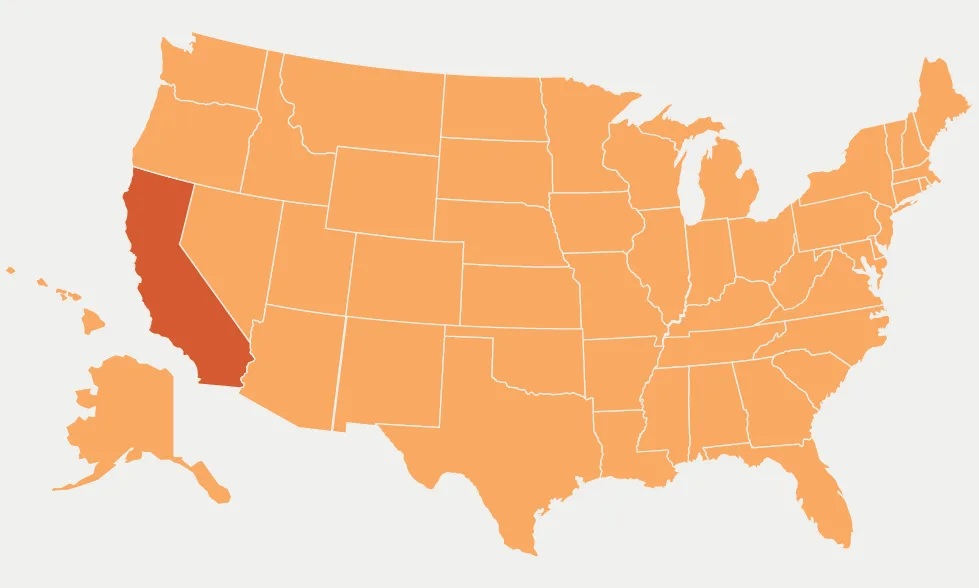
California’s State legislature adopted Senate Bill (SB) 1206 in September 2022. SB 1206 prohibits a person from offering for sale or distribution or otherwise entering commerce in the state bulk hydrofluorocarbons or bulk blends containing hydrofluorocarbons (HFCs) that exceed a specified global warming potential limit beginning January 1, 2025.
Compliance Dates Prohibiting Virgin Bulk HFC Refrigerants
SB 1206 applies to virgin or new HFCs sold in bulk. Bulk is defined as any amount of refrigerant in a container for transporting or storing that substance, such as cylinders, drums, ISO tanks, and small cans.
Generally, SB 1206 prohibits the sale of virgin or new bulk HFCs by the schedule below:
Greater than 2,200 GWP starting 1/1/2025
Greater than 1,500 GWP starting 1/1/2030
Greater than 750 GWP starting 1/1/2033
A different prohibition schedule will apply if the building is state-owned or operated. SB 1206 prohibits state-owned or operated buildings from the sale of virgin or new bulk HFCs Greater than 750 GWP starting 1/1/2025.
SB 1206 does allow for the sale of reclaimed HFCs. Reclaim is defined as reprocessing refrigerant to AHRI standard 700-2016 specifications. In essence, reclaim sales of all HFCs are allowed as long as the HFCs are from a United States Environmental Protection Agency-certified reclaimer.
Refrigerants Affected
SB 1206 affects all substances that use HFCs, including foams, aerosols, fire suppressants, cold storage warehouses, refrigeration systems, air conditioning, and heat pumps. View the table below for GWP thresholds of the most common refrigerants. Note that the table shows the most common refrigerants and is not exhaustive. SB1206 uses a GWP100 calculation, and some ultra-low GWP alternatives are not listed because they have zero GWP.
Refrigerant | Type | GWP | Prohibition Begins | Year Prohibition Begins if Building is State-owned or operated |
R404A | HFC | 3,922 | January 2025 | January 2025 |
R407A | HFC | 2,107 | January 2025 | January 2025 |
R410A | HFC | 2,088 | January 2030 | January 2025 |
R22 | HCFC | 1,810 | January 2030 | January 2025 |
R407C | HFC | 1,774 | January 2030 | January 2025 |
R134a | HFC | 1,430 | January 2033 | January 2025 |
R449A | HFC/HFO | 1,396 | January 2033 | January 2025 |
R448A | HFC/HFO | 1,386 | January 2033 | January 2025 |
R452B | HFC/HFO | 698 | - | - |
R32 | HFC | 675 | - | - |
R454B | HFC/HFO | 465 | - | - |
R454A | HFC/HFO | 237 | - | - |
R454C | HFC/HFO | 146 | - | - |
R290 | Non-fluorinated (Industrial) | 3.3 | - | - |
R1270 | Non-fluorinated (Industrial) | 2.8 | - | - |
R1234ze | HFO | 1 | - | - |
R1234yf | HFO | 1 | - | - |
R744 | Non-fluorinated (Industrial) | 1 | - | - |
R600a | Non-fluorinated (Industrial) | 1 | - | - |
R717 | Non-fluorinated (Industrial) | 1 | - | - |
Table 1. Data from the EPA Technology Transitions GWP Reference Table and IPCC's Assessment Reports per California Air Resources Board.
SB1206 Changes HVACR Industry
SB1206 will primarily affect distributors and contractors because the Technology Transition Rule will prohibit the manufacture of equipment using many of the prohibited refrigerants.
For Distributors, the upcoming deadlines will require careful inventory management to ensure prohibited virgin refrigerants are sold before the sale becomes illegal. Additionally, because only reclaimed refrigerants can be sold after the prohibition date, the decreased supply will impact the price of these refrigerants. Distributors must monitor the dates of prohibitions and manage their supply accordingly for refrigerant needs. Additionally, if the reclaimed refrigerant supply is too low, ensure that parts are available to retrofit existing systems to lower GWP refrigerants that are still available.
SB 1206 prohibits the sale of prohibited refrigerants. For contractors, this means that a partially used refrigerant cylinder could be illegal to use in repairing equipment because that refrigerant is being sold to the customer. Contractors should plan to use up any remaining virgin refrigerant before the prohibition date. Additionally, the supply of reclaimed refrigerant is limited by how much refrigerant is recovered. Contractors will need to recover refrigerant whenever possible to ensure a future supply of reclaimed refrigerant.
SB1206 and Reclaimed Refrigerant Necessity
The scheduled implementation of prohibitions that will be phasing down HFC usage in California will create a demand for reclaimed refrigerants. Distributors will need to plan future inventory based on the virgin refrigerant restrictions. For instance, beginning January 1, 2025, the only way to refill or “top off” refrigerant in an R404A or R407A system will be by using reclaimed refrigerant. With this growth in recovery and reclamation coming, it is crucial to establish the necessary relationships with the EPA Certified Reclaimers to help have refrigerant in stock. The bill requires the reclaim to be done by a United States Environmental Protection Agency-certified reclaimer. View the link to help your business find certified reclaimers and begin creating those relationships necessary to your business soon.
Establishing early connections is essential for distributors because some reclaimers offer the opportunity to bank refrigerant. This means that for every pound of recovered refrigerant sent in, a certain percentage is guaranteed to be returned to you in the future. This creates a refrigerant bank you can access, as virgin supplies are prohibited. Some reclaimers will even allow you to extend banking to your customers. If one is bringing in a high recovery volume, you can guarantee them access to refrigerant through your bank. They won’t get that access elsewhere unless they also move their recovery to the competition; it’s another way to lock in a customer, especially commercial contractors, where dealer relationships are less influential. But the most important reason to begin the relationship building now is if you don’t have a relationship with a reclaimer, your only other option will be to pay the inflated cost for the reclaimed refrigerant. Increasing recovery and reclaim are the only ways to help fill the demand gap caused by SB 1206.
California Air Resources Board (CARB) HFC Assessment
California’s SB 1206 requires CARB to create an assessment specifying how to transition the state’s economy away from HFCs and to ultra-low GWP or no-GWP alternatives no later than 2035 through maximizing recovery and reclamation and increasing adoption of new low and ultra-low GWP alternative refrigerants. This assessment is required to be on CARB’s website by January 1, 2025.
Please click here for the complete California SB 1206 (2022) language.
Want to learn more about State Issues?
HARDI's Advocacy efforts are centered around specific key issues relevant to the HVACR industry, wholesale distribution, and family & small businesses. To educate elected officials on legislative and regulatory issues that specifically affect the HVACR industry, HARDI aims to keep members informed and up to date on the latest news impacting our industry.
Explore more State Issues like this one on HARDI's State Issues page.
Contact Todd Titus, Director of State and Public Affairs, with additional questions.

Todd Titus
Director of State Government Affairs
Todd Titus, J.D. is HARDI's Director of State Government Affairs. As the lead of HARDI's new state affairs department, Todd monitors legislative and regulatory issues across all 50 states to inform HARDI membership about the legislation that impacts the industry. Along with informing membership of key issues, Todd also spearheads grassroots initiatives, advocates before elected officials, and networks in person with relevant stakeholders.