Advocacy
EPA to Rollback Basis for Climate Change Rules, Does Not Affect HFC Phasedown
July 30, 2025 | 3 minute read
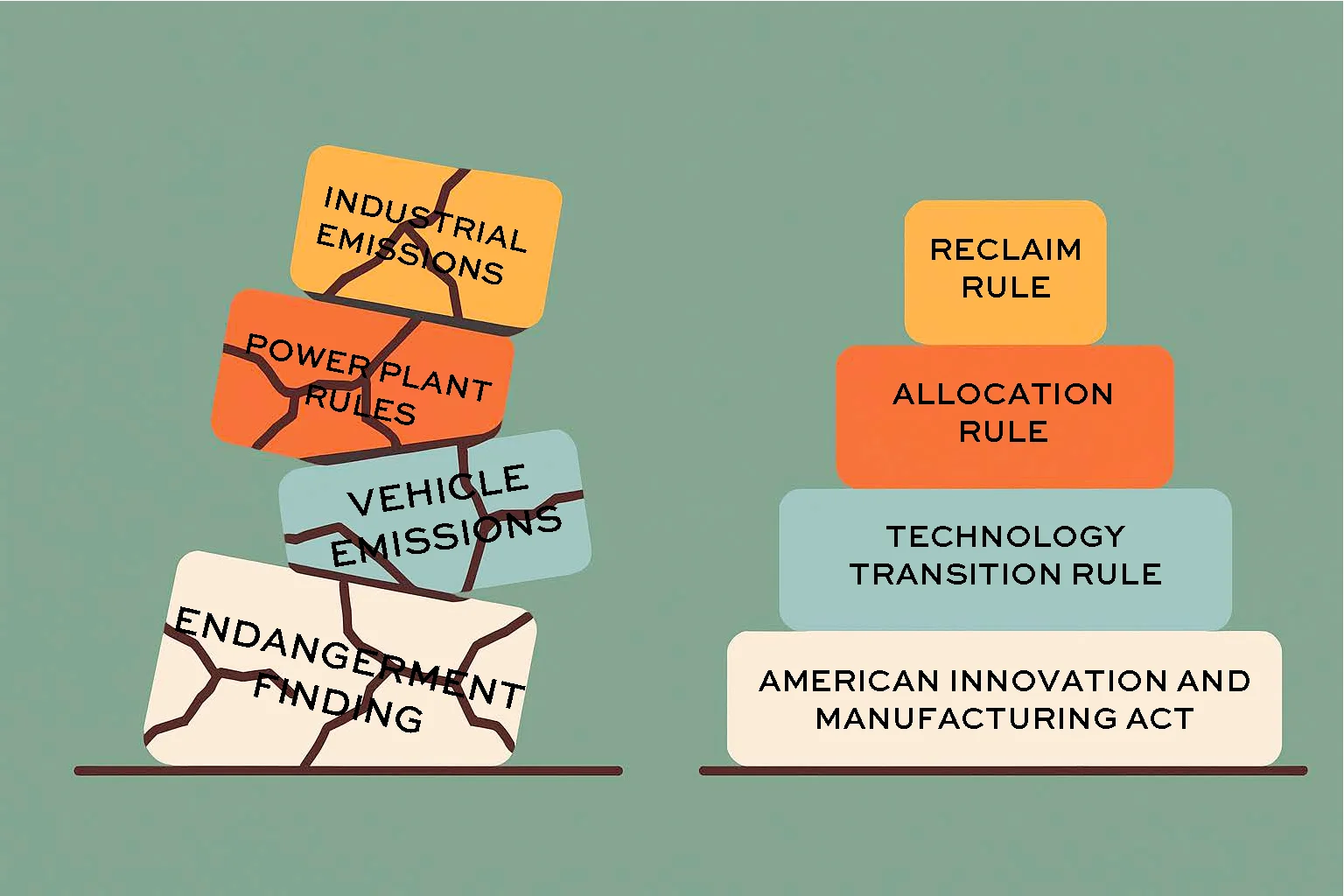
Yesterday, the Trump Administration announced its plan to repeal what is known as the “endangerment finding,” which says carbon dioxide and other greenhouse gases harm the environment and pose a risk to humans. The endangerment finding is the foundation upon which many climate change rules under the Clean Air Act are built. While the future action to overturn the endangerment finding will have economy-wide impacts on climate change rules, the change will not impact the HFC phasedown. The phasedown is based on the American Innovation and Manufacturing (AIM) Act. This separate statute expressly directs EPA to phase down HFC production and consumption regardless of how the agency treats greenhouse gases under the broader Clean Air Act.
The AIM Act Sets HFC Phasedown, Not the Endangerment Finding
Through the AIM Act, Congress has directed the agency to phase down HFCs, regardless of the existence of the endangerment finding. Repealing that mandate would require another act of Congress, not an internal EPA rulemaking.
The AIM Act locks in specific reduction steps between now and 2036:
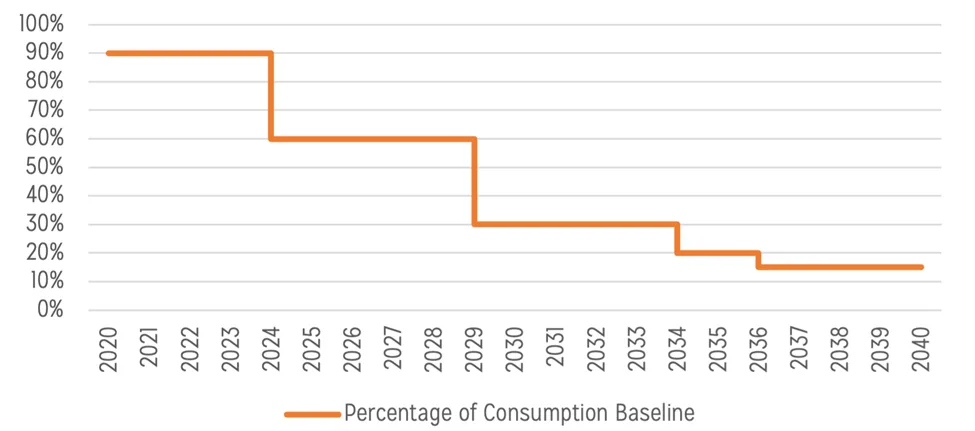
EPA’s allowance allocations for 2024 through 2028 are already on the books, and the agency is required to continue the phase down by statute. Even a successful rollback of the endangerment finding would not pause or rewrite this phasedown calendar.
Unlike the broad Clean Air Act provisions impacted by the endangerment finding, the AIM Act is laser-focused on a single class of chemicals: hydrofluorocarbons. EPA cannot use the AIM Act to regulate unrelated chemicals, nor can it disregard the phasedown schedule. This narrow scope was an industry ask of lawmakers, who wanted certainty for businesses making long-term refrigerant and equipment investments.
Long-term Impact on Climate Regulations
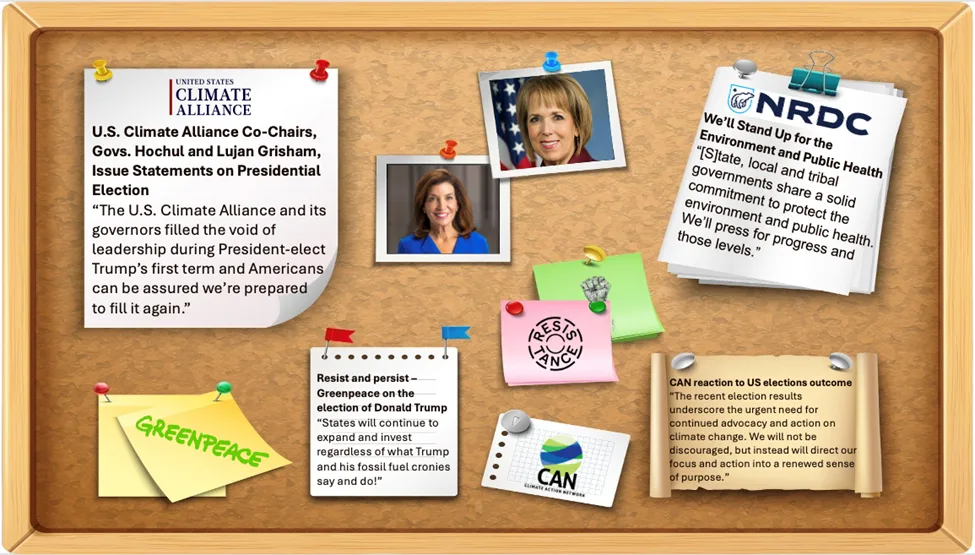
Any future administration can change future regulations, which means a future democratic president can bring the endangerment finding back. Additionally, recent court decisions have removed federal preemption of emissions rules by states and local governments. Many states want to regulate in the absence of federal leadership. New York Governor Kathy Hochul and New Mexico Governor Michelle Lujan Grisham called for state action after President Trump’s election: “The U.S. Climate Alliance and its governors filled the void of leadership during President-elect Trump’s first term and Americans can be assured we’re prepared to fill it again.” This could lead to states banning gas appliances over emissions instead of energy use.
What it Means for HARDI Members and the HVACR Industry
HARDI members, the bottom line is simple: keep following the AIM Act requirements, communicate with your contractor customers that the transition will continue, make long-term plans for refrigerant supply (both new refrigerants and reclaimed refrigerants), and stay engaged with HARDI as we look at future rulemakings. The legal foundation under our industry’s transition remains solid, no matter what happens to the endangerment finding.
Are You Your Company's Government Affairs Insider?
This overview video is just the tip of the HARDI Government Affairs iceberg! Ensure you stay informed on the latest Government Affairs and Advocacy updates by subscribing yourself or your company's key contact for these issues. Get the Federal and State issues information that is impacting the HVACR industry.

Alex Ayers
Vice President of Government Affairs
Alex is HARDI’s lead lobbyist and regulatory expert, with over a decade of experience in Washington, DC. A former Iowa caucus delegate, he built early roots in grassroots politics. He has lobbied, published, and testified on taxes, energy, environment, agriculture, and economics. His work has been cited by the Wall Street Journal, Forbes, and the Tax Foundation.